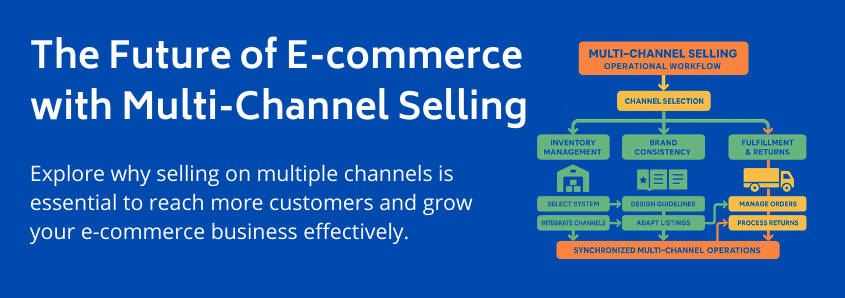
The Future of E-commerce: Why Multi-Channel Selling is Non-Negotiable for Growth
Remember when having a great website was the finish line for selling online? You built a beautiful storefront, optimized your product pages, and waited for customers to find you on your single patch of digital real estate. For a time, that worked. But if you’ve noticed that growth has plateaued or that your competition seems to be popping up everywhere, you’re not imagining things. The e-commerce landscape has fundamentally changed.
Customers no longer travel down a single “digital main street.” They discover products on TikTok, compare prices on Google Shopping, ask for recommendations on Facebook, and make final purchases on Amazon or a brand’s mobile app. Sticking to a single channel today is like opening a fantastic shop on a quiet side street while your customers are all at a bustling festival across town. To grow, you have to go where the people are.
The Days of a Single “Digital Main Street” Are Over
The modern consumer’s path to purchase isn’t a straight line; it’s a web. They might see an ad on Instagram, search for reviews on their laptop, and then add the item to their cart on a marketplace app a week later. They expect to find you on the platforms they already use and trust.
This fragmentation isn’t a temporary trend, it’s the new reality. Relying solely on your WooCommerce store means you’re invisible to massive segments of your potential audience. Multi-channel selling isn’t about abandoning your website; it’s about building bridges from your website to every corner of the digital world where your ideal customer spends their time.
Multi-Channel vs. Omnichannel: What’s the Real Difference?
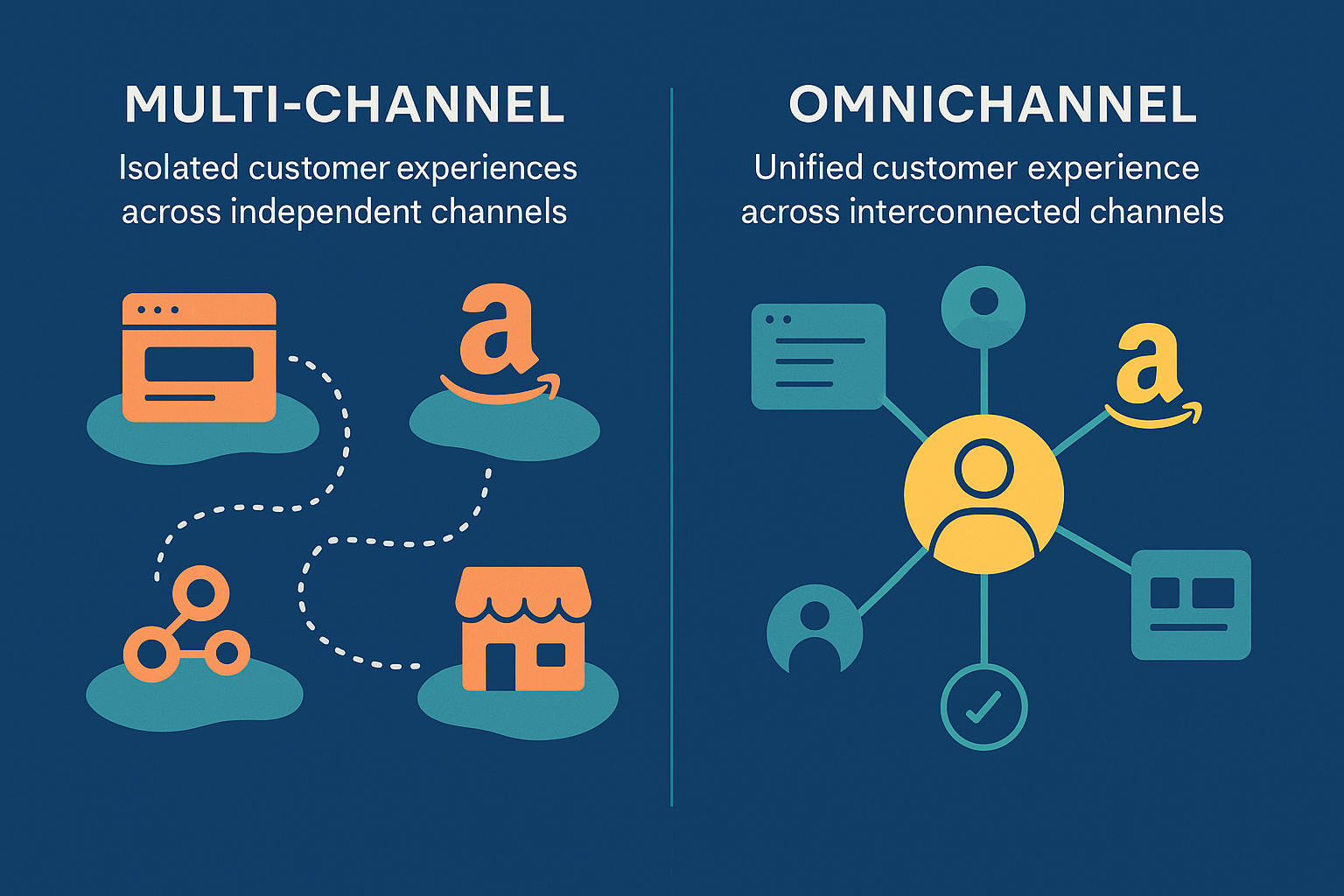
As you start exploring this world, you’ll encounter two terms that are often used interchangeably but mean very different things: multi-channel and omnichannel. Understanding the distinction is the first step toward building a smarter growth strategy.
Multi-Channel: Casting a Wider Net
Think of multi-channel selling as putting your products on multiple, separate shelves. You have your main WooCommerce store, but you also sell on Amazon, have a Facebook Shop, and list products on Google Shopping.
- The Goal: Maximize reach and be present wherever customers are searching.
- The Experience: Each channel operates as its own independent storefront. A customer’s experience on your Amazon page is separate from their experience on your website.
- The Analogy: It’s like a band selling merchandise at their concert, through their fan club website, and in a retail store. The products are the same, but the purchasing experiences are disconnected.
This is the essential first step. It gets your products in front of more eyes and creates new revenue streams.
Omnichannel: Creating a Seamless Universe
Omnichannel is the evolution of multi-channel. It takes all those separate channels and weaves them into a single, unified customer experience.
- The Goal: Create a consistent and interconnected journey for the customer, regardless of how they interact with your brand.
- The Experience: The channels talk to each other. A customer can add an item to their cart on their phone via your app and see it waiting in their cart when they log in on their desktop later. Inventory is synced in real-time across all platforms.
- The Analogy: It’s like starting a movie on Netflix on your TV, pausing it, and seamlessly picking up where you left off on your tablet during your commute. The experience is frictionless.
For most merchants, the journey starts with building a solid multi-channel presence. Once that’s established, you can begin connecting the pieces to create a truly omnichannel experience. The key is to start strategically.
The High Cost of a Single-Channel Strategy
Staying put might feel safer, but in today’s market, it carries hidden risks that can silently stunt your growth. The challenges of poor cross-channel management are not small; one estimate from Emplicit.co suggests that issues like stockouts and mismatched data contribute to a staggering $1.75 trillion in lost revenue annually for retailers.
Here’s what you’re up against by not expanding:
- Limited Reach: You’re only talking to the people who already know to look for you, missing out on vast audiences who start their shopping journey on marketplaces and social platforms.
- Lack of Resilience: Your entire business is vulnerable to a single point of failure. A Google algorithm update that hurts your SEO, a drop in social media reach, or website downtime can wipe out your sales overnight. Multiple channels create a more stable, resilient business.
- Customer Disconnect: You force customers to come to you, rather than meeting them where they are. In an age of convenience, that friction is often enough to make them choose a competitor who offers a smoother path.
Expanding your presence is one of the most effective ways to increase ecommerce sales and build a more future-proof brand.
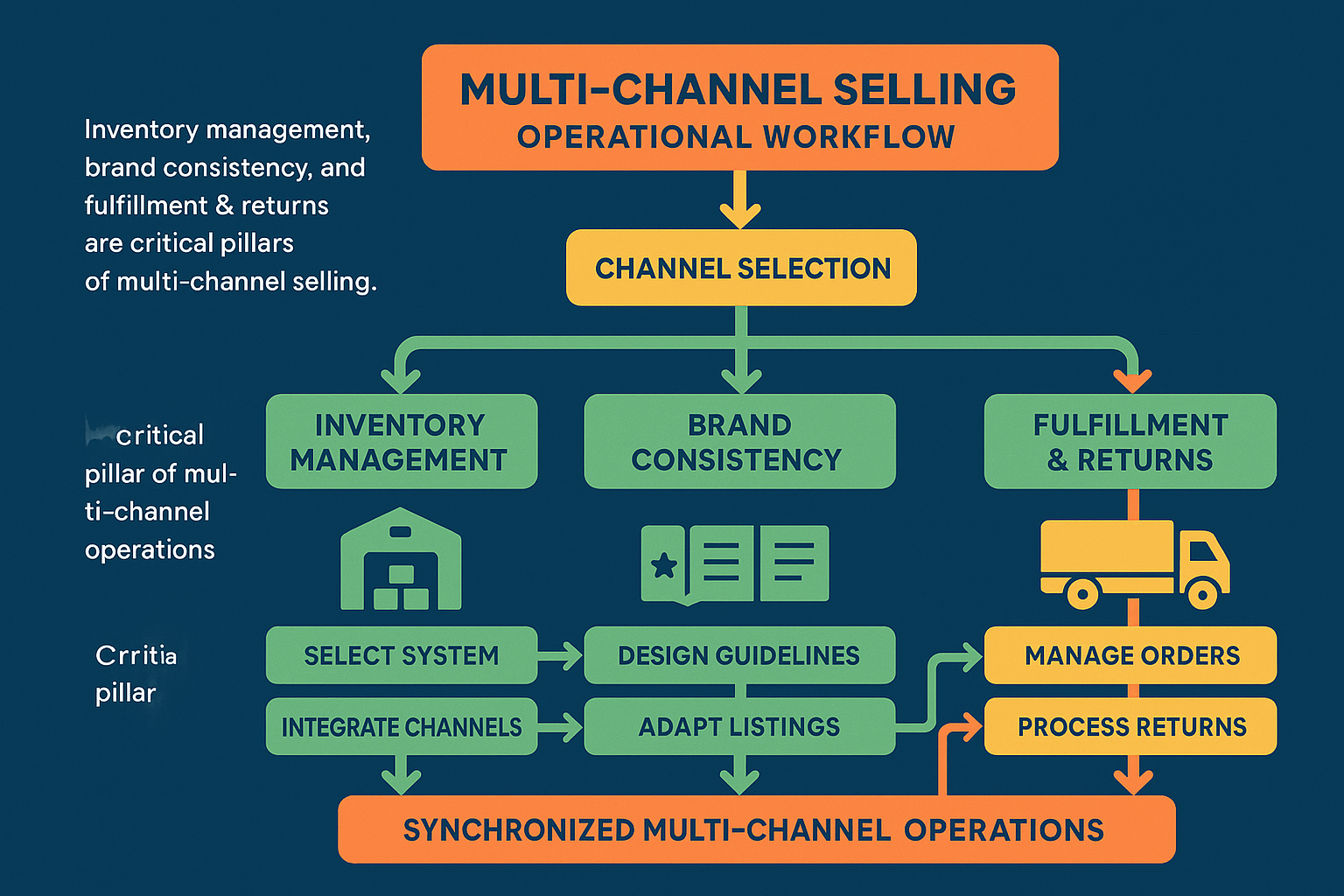
Building Your Multi-Channel Foundation: The Three Core Pillars
Successfully transitioning to a multi-channel strategy isn’t about flipping a switch; it requires a thoughtful foundation built on three core pillars.
Pillar 1: Strategic Channel Selection
The goal isn’t to be everywhere; it’s to be everywhere that matters for your brand. Bombarding every possible channel without a plan will drain your resources and dilute your message. Ask yourself:
- Audience: Where does my ideal customer hang out, search, and shop? Is it Pinterest, Amazon, a niche forum, or TikTok?
- Brand Fit: Does the channel’s environment align with my brand’s image? A luxury brand might feel out of place on a discount marketplace.
- Resources: What are the fees, rules, and time commitments for each channel? Start with one or two new channels you can manage well before expanding further.
Pillar 2: Centralized Operations
This is where most multi-channel strategies either succeed or fail. When you’re selling in multiple places, you create multiple sources of data. Managing them separately is a recipe for disaster think incorrect stock levels, inconsistent pricing, and a logistical nightmare.
Effective ecommerce feed management is the solution. Instead of manually updating products on each channel, you need a central system to manage your product information. This involves:
- Synced Inventory: When a product sells on Amazon, its stock count should automatically update on your WooCommerce store and Facebook Shop to prevent overselling.
- Consistent Product Data: Your titles, descriptions, prices, and images should be consistent yet tailored to the format of each channel. The different product feed components required by each marketplace must be accurate.
- Efficient Fulfillment: A unified view of orders from all channels allows you to streamline your shipping and returns process.
Pillar 3: Data-Driven Insights
Which channels are driving the most sales? Which ones have the highest profit margins? Without data, you’re just guessing. Each channel you add is a new source of valuable information about your customers and products. By tracking performance, you can double down on what’s working, fix what isn’t, and make informed decisions about where to invest your time and money next.
Navigating the Pitfalls: Common Multi-Channel Myths Debunked
Venturing into multi-channel selling can feel intimidating, partly due to some persistent myths. Let’s clear them up.
Myth 1: “More channels always mean more sales.”Reality: More channels only lead to more sales if they are the right channels and are managed effectively. Spreading yourself too thin across irrelevant platforms can drain resources and lead to a poor customer experience, hurting your brand more than helping it.
Myth 2: “It’s too complicated and expensive for a small business.”Reality: The tools and technology available today have made multi-channel selling more accessible than ever. With a solid WooCommerce marketing strategy and the right automation tools to handle tasks like product feed updates, even a one-person shop can manage a powerful multi-channel presence.
Myth 3: “If I’m on a few channels, I’m already omnichannel.”Reality: Being on multiple channels is the first step, but it isn’t omnichannel. Omnichannel is the next level, where those channels are deeply integrated to provide a seamless customer journey. Focus on mastering multi-channel first: get your products listed and your operations centralized.
Your Multi-Channel Questions, Answered
What is the main benefit of multi-channel selling?
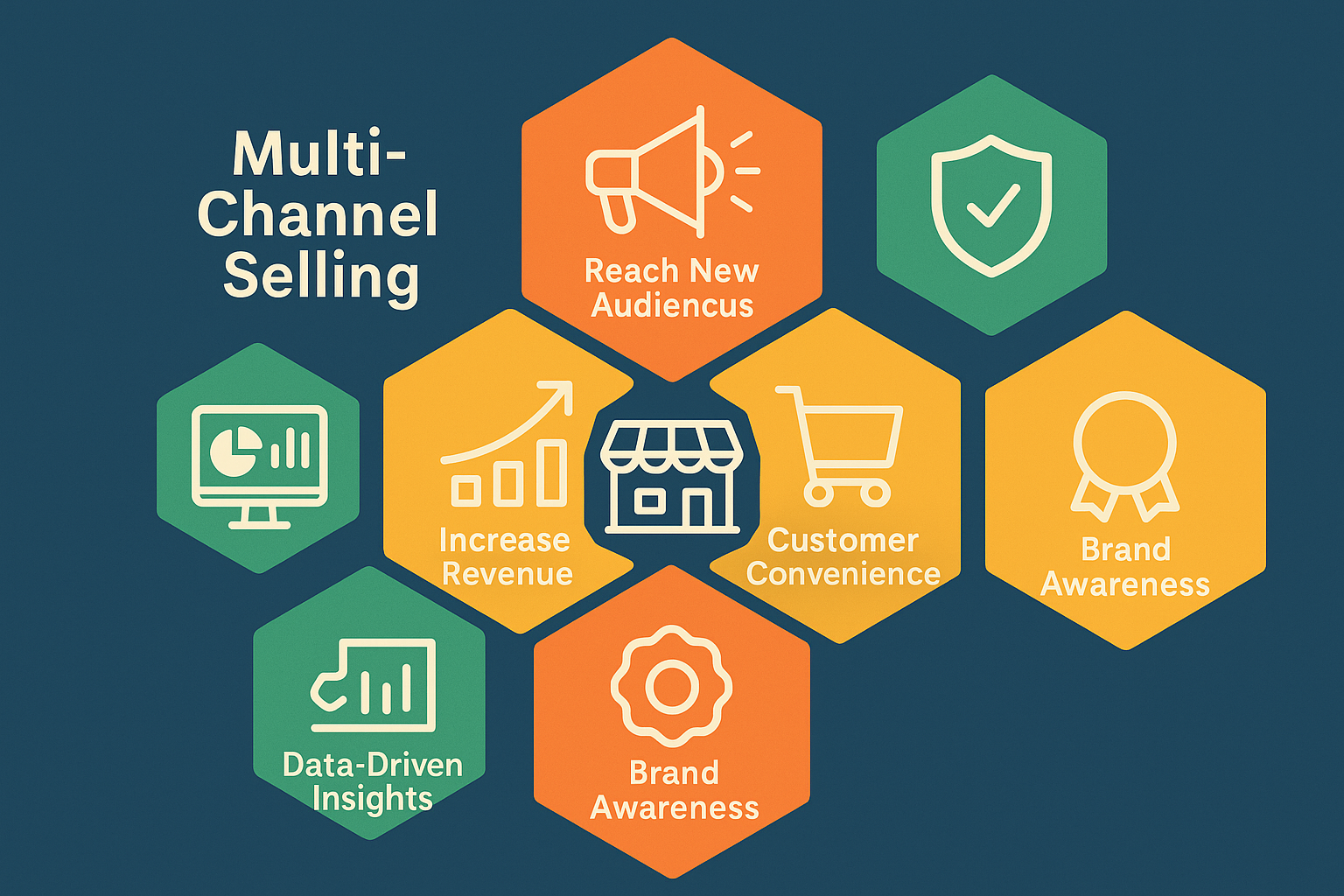
The single biggest benefit is expanded reach. It allows you to get your products in front of customers who would never have found your website on their own. This leads to increased brand awareness, more diverse revenue streams, and a more resilient business.
How do I choose the right channels for my store?
Start with research. Identify your target audience and find out which platforms they use most for product discovery and purchasing. Analyze your top competitors to see which channels they are succeeding on. Finally, consider your product type: visual products do well on Instagram and Pinterest, while standard goods thrive on Google Shopping and Amazon.
How do I manage my inventory across different channels?
Manual management is not sustainable. The best practice is to use a centralized system that can sync your inventory in real-time across all your sales channels. This is often handled through product feed management software, which ensures that when an item sells on one channel, the stock count is automatically adjusted on all others. A reliable ecommerce data feed is crucial for preventing overselling and disappointing customers.
Is multi-channel selling only for large businesses?
Absolutely not. Thanks to plugins and automation tools designed for platforms like WooCommerce, small and medium-sized businesses can now compete effectively across multiple channels without needing a large team or budget. The key is to start smart, automate where possible, and focus on the channels with the highest return.
Your Next Step: From Learner to Leader
The shift to multi-channel e-commerce is not a distant future; it’s happening right now. Customers expect to find you on their preferred platforms, and if they don’t, they’ll find a competitor who is there.
Viewing this not as a daunting task but as a tremendous opportunity is the key to growth. You don’t have to conquer every channel overnight. The journey begins with a single, strategic step.
Start today by auditing your customer’s journey. Where do they come from? Where else do they shop? Choose just one potential new channel to research this week. By embracing a multi-channel mindset, you stop waiting for customers to find you and start building a brand that meets them wherever they are.


Leave a Reply
Want to join the discussion?Feel free to contribute!