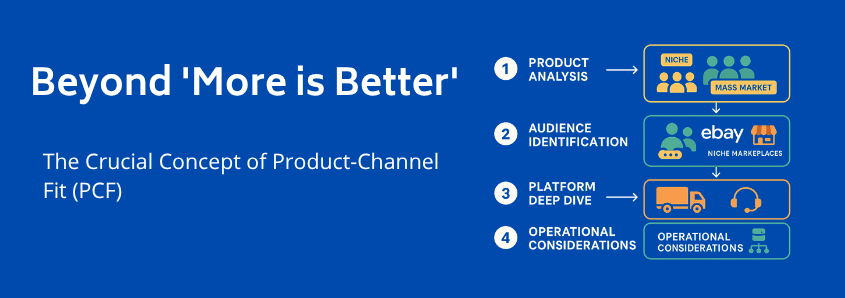
Beyond ‘More is Better’: The Crucial Concept of Product-Channel Fit (PCF)
You’ve built your WooCommerce store, polished your product pages, and are seeing your first sales come in. Now, the big question looms: “Where else should I be selling?” You’ve heard the names Amazon, eBay, and a dozen others, and the temptation is to list your products everywhere you can.
But hold on. Spreading your products across the internet without a strategy is like shouting into the wind. The secret to multi-channel success isn’t about being everywhere; it’s about being in the right places.
Welcome to the concept of Product-Channel Fit (PCF). It’s the simple but powerful idea that certain products are naturally suited to thrive on specific platforms. Understanding this is the single most important step you can take before expanding your e-commerce empire. This guide will be your compass, helping you navigate the vast world of online marketplaces to find the perfect home for your products.
Beyond ‘More is Better’: The Crucial Concept of Product-Channel Fit (PCF)
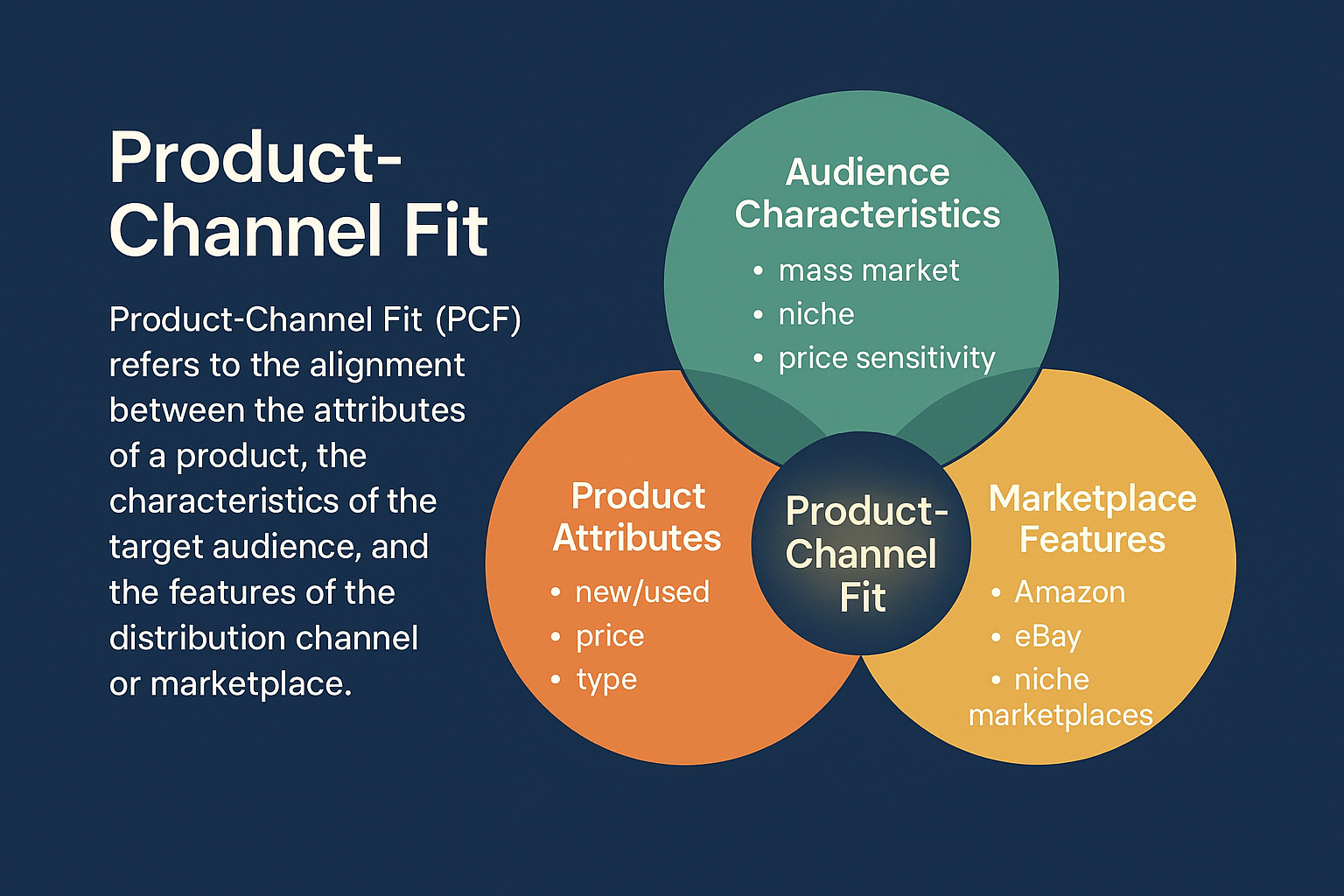
You’ve probably heard of Product-Market Fit, creating a product that a specific group of people desperately wants. Product-Channel Fit is the next logical step. It’s about aligning your product with a sales channel where the audience, buying behavior, and platform rules all work in your favor.
Think of it like this: you wouldn’t try to sell a rare, autographed baseball card at a grocery store. You’d take it to a sports memorabilia auction. The product is the same, but the channel makes all the difference.
Getting PCF right means:
- Higher Conversion Rates: You’re putting your product in front of people already looking for it.
- Better Profit Margins: You avoid a race-to-the-bottom on price against mismatched competitors.
- Stronger Brand Identity: You build a reputation in a community that values what you offer.
- Less Wasted Effort: You focus your energy on channels that actually deliver results.
The Three Core Marketplace Archetypes
To find your fit, you first need to understand the landscape. Most online marketplaces fall into one of three categories.
The Amazon Ecosystem: Built for Speed and Scale
Amazon is the undisputed giant of e-commerce, an “everything store” built on convenience and massive selection. It’s a high-volume, high-competition environment.
- What Thrives Here? New, branded, and high-demand products. Think of items with a barcode that people already know and search for: popular electronics, bestselling books, standard kitchen gadgets, and consumable goods. If your product is a commodity, Amazon is likely a fit.
- The Amazon Shopper: This buyer values speed and trust above all else. They are often Prime members who expect two-day shipping, rely heavily on customer reviews, and prioritize convenience over discovering a unique brand story.
- Key Considerations: Fulfillment by Amazon (FBA) is almost a prerequisite for success, handling storage, packing, and shipping for you but adding fees. Brand control is minimal; you’re playing in Amazon’s sandbox, by their rules.
- Myth vs. Reality: A common myth is that Amazon is for everything, including used goods. While you can sell used items on Amazon, the process is restrictive, with strict condition guidelines. For most sellers, it’s not the ideal platform for pre-owned products.
The eBay Marketplace: The Home of Unique and Pre-Owned
If Amazon is a hypermarket, eBay is the world’s largest and most eclectic flea market, auction house, and outlet mall rolled into one. It’s a platform built on discovery and value.
- What Thrives Here? Unique, used, vintage, and collectible items. This is the premier destination for second-hand clothing, refurbished electronics, rare collectibles, car parts, and one-of-a-kind treasures. The auction-style format is perfect for items with a variable or hard-to-determine market value.
- The eBay Shopper: This buyer is a hunter. They are looking for a deal, a rare find, or a specific part they can’t get anywhere else. They are more patient with shipping and enjoy the thrill of bidding.
- Key Considerations: You have far more control over your listings, photography, and shipping methods. Building a strong seller reputation through positive feedback is paramount to earning trust.
Niche Marketplaces: Where Passion Meets Product
Beyond the giants lie a vibrant ecosystem of specialized marketplaces, each catering to a specific passion or community.
- What Thrives Here? Products that serve a dedicated hobby or lifestyle. Think handmade jewelry on Etsy, rare guitar pedals on Reverb, sustainable fashion on a B-Corp certified site, or fine art on Saatchi Art.
- The Niche Shopper: This is an enthusiast, not just a consumer. They value authenticity, craftsmanship, and expertise. They are often willing to pay a premium to buy from a seller who shares their passion and is part of their community.
- Key Considerations: The audience is smaller but highly targeted and engaged. There is far less competition, allowing you to build a stronger brand and often command higher prices. You are a member of the community, not just a seller.
A Practical Framework: How to Choose Your Sales Channels
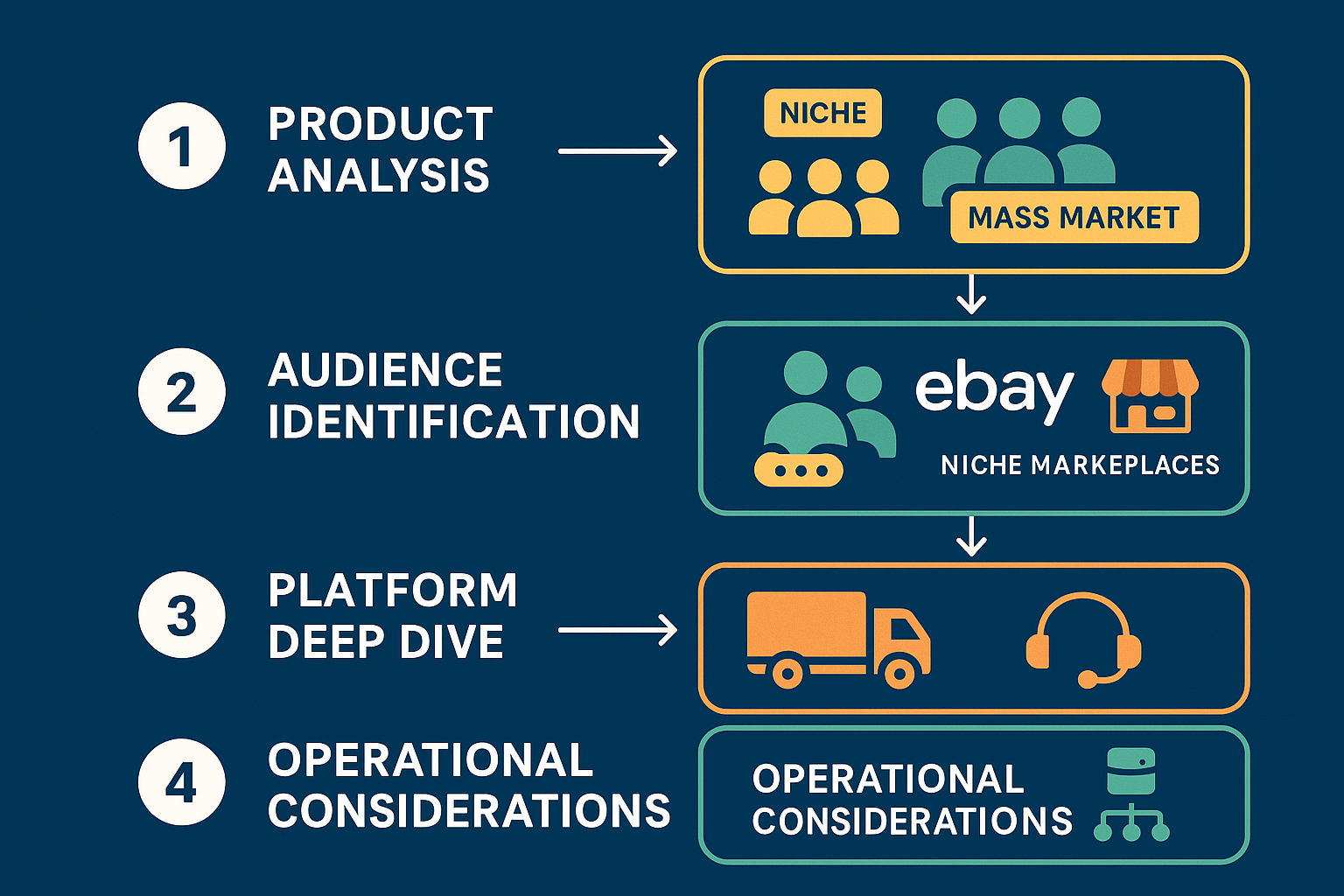
Ready to find the right home for your products? Follow this simple, four-step process.
Step 1: Deeply Analyze Your Product
Look at your product not as a seller, but as a buyer. What are its core characteristics? The specific ecommerce product attributes you define here are the foundation of your strategy.
- Condition: Is it new in a box, used, refurbished, or handmade?
- Branding: Is it a well-known brand, a private-label product, or a unique, unbranded item?
- Uniqueness: Is it a mass-produced commodity or a one-of-a-kind collectible?
- Price: Is it a low-cost impulse buy or a high-consideration purchase?
Step 2: Identify Your Target Audience
Who is your ideal customer?
- Are they looking for the absolute lowest price or the best value?
- Do they prioritize next-day delivery or unique craftsmanship?
- Are they buying based on a logical need or an emotional want?
Step 3: Evaluate Platform Alignment
Now, match your findings from steps 1 and 2 with the marketplace archetypes. This comparative matrix will help you see where your product most naturally fits.
Step 4: Consider a Multi-Channel Strategy
Here’s where the real “aha moment” happens: you don’t have to choose just one. The most successful sellers often use a combination of channels, letting each one play to its strengths.
For example, a business selling high-end cameras could:
- Sell new, in-box cameras on Amazon to capture high-volume, convenience-driven buyers.
- Sell used trade-ins, vintage models, and refurbished lenses on eBay to attract bargain hunters and collectors.
- Sell exclusive, custom photography accessories on their own WooCommerce store to build their brand and maximize profit.
This strategy allows you to capture different segments of the market and increase ecommerce sales dramatically.
The Power of Multi-Channel Selling: Don’t Put All Your Eggs in One Basket
Adopting a multi-channel strategy is one of the most powerful ways to grow your e-commerce business. But it introduces a new, critical challenge: complexity.
How do you make sure your new camera on Amazon has a different description, price, and set of attributes than your refurbished model on eBay? How do you ensure your stock levels are accurate across all channels?
This is where your ecommerce data feed becomes the central nervous system of your business. Each channel has its own unique requirements for how product information should be formatted. Managing this manually is a time-consuming nightmare prone to costly errors. Effective and automated ecommerce feed management is what separates amateur sellers from professional operations.
Frequently Asked Questions (FAQ)
Is it better to focus on one marketplace or sell on many?Start with one. Choose the channel that best fits your flagship products using the PCF framework. Master its rules, understand its audience, and build your reputation. Once you have a stable, profitable operation, you can strategically expand to a second or third channel to capture new customer segments.
How do I manage inventory if I sell on my website, Amazon, and eBay?Your WooCommerce store should always be your central “source of truth.” As sales happen on any channel, your inventory should update automatically across all platforms. This prevents you from selling items you no longer have in stock. This process, known as inventory syncing, is a key feature of a good management system.
What’s the biggest mistake beginners make when choosing a channel?The most common mistake is assuming that the biggest channel (Amazon) is always the best one. They list a unique, handmade product on Amazon and wonder why it doesn’t sell, failing to realize it’s getting lost in a sea of mass-produced goods. Taking 30 minutes to analyze Product-Channel Fit can save months of frustration.
Your Next Step: From Insight to Action
You now have a framework for making smarter, more strategic decisions about where to sell your products. Instead of just asking “Where can I sell?” you can now ask “Where will my product thrive?”
Your homework is simple:
- Pick one product from your WooCommerce store.
- Walk it through the PCF framework. Analyze its attributes, define its ideal customer, and see which marketplace archetype is the most natural fit.
- Explore that channel. Spend time on the platform as a buyer. See how similar products are listed, what prices they command, and what successful sellers are doing right.
This simple exercise will shift your perspective from a hopeful seller to a strategic business owner.
As you grow and look to expand across multiple channels, the complexity will grow with you. When you’re ready to automate and streamline that process, it’s wise to choose a feed manager that can adapt your product data effortlessly for every channel you operate on.

Leave a Reply
Want to join the discussion?Feel free to contribute!