Evaluating WooCommerce Product Feed Plugins: Why Support Quality Is Your Single Biggest Investment

You are currently comparing WooCommerce product feed managers. You’ve likely studied the feature lists, filtering controls, update automation, template mapping, and those details are crucial. But at this core evaluation stage, there is one critical factor often overlooked until it’s too late: the quality and expertise of the support team behind the plugin.

We understand that you’re not just buying a piece of software; you are investing in a tool to drive revenue. If that tool breaks, or if a major shopping channel like Google or Facebook changes its feed requirements, how fast and how expertly the problem is solved directly impacts your sales.

For a serious e-commerce merchant, feed management is not a hobby. It’s an engine. And every engine needs reliable mechanics.

The Cost of Anonymous Ticketing: Minimizing Risk and Downtime

When prospects evaluate WooCommerce plugins, they often focus on price and features, treating support as a commodity checklist item. Do they offer support? Check. The hidden risk, however, resides in the quality and expertise within that support structure.

A generic ticketing system, often handled by outsourced level-one technicians, can answer simple installation questions but often fails when faced with complex, revenue-stalling issues. These might include:

  1. Category Mapping Failures: When your highly specific product categories don’t translate correctly to a broad channel taxonomy, resulting in product disapprovals.
  2. Conditional Logic Errors: Using smart attributes and filters incorrectly, which leads to your best sellers being excluded from the feed.
  3. Multi-Channel Validation: Dealing with simultaneous validation issues across Google Shopping, Facebook Catalogue, and Amazon requirements, each with unique and strict data demands.

Research shows that 59% of customers prioritize high-quality customer service when choosing a brand, and in technical eCommerce solutions, this jumps even higher because downtime literally costs money. When your feed is broken during a peak sales period, a 24-hour delay from an anonymous support queue can zero out the plugin’s entire annual cost in lost revenue.

Why Dutch and European Expertise Matters in eCommerce

WP Marketing Robot was founded by online marketing specialists in the Netherlands because our clients, successful WooCommerce shop owners, needed reliable, accurate product feeds. Our mission is built on precision, experience, and partnership.

Our support is not just technical; it’s steeped in online marketing expertise. When you choose a partner whose team is primarily based in Europe and dedicated to feed management:

  • You gain expertise in localized market requirements: We understand things like VAT handling, specific European category taxonomies, and cross-border currency implications. We are specialists in maintaining compliant feeds for global reach.
  • You get immediate access to deep knowledge: Our team doesn’t need to escalate basic issues. We solve problems because we designed the solution and live the world of online marketing. Testimonials frequently mention the “really useful plugins around” combined with “top notch” support as a core reason for continued usage.
  • You build confident relationships: This approach reduces the perceived risk. Our MOFL readers need evidence that validates their criteria, and knowing you have a dedicated, expert partner accelerates the decision-making process.

FAQ: The Most Common WooCommerce Feed Errors Our Team Solves Daily

If you are evaluating technical solutions, understanding the common failure points helps you gauge the required level of expertise. Here are frequently encountered support issues where generic support often stalls, but dedicated specialists excel:

1. “My products are disapproved, but the feed file looks fine.”

This is the most frequent issue. The feed file might be syntactically correct (valid XML or CSV), but the data within it violates an external channel rule. For example, a required attribute is missing, or the image quality is too low according to the Google Merchant Center policy. Our experts immediately dive into the specific channel diagnostics (we know where to look) and advise on fixing the data within the plugin’s attribute mapping logic, not just the raw file.

2. “I need to exclude a large category of products based on multiple complex conditions.”

This is where our proprietary value proposition, advanced filtering, comes into play. Many plugins offer basic filtering. We provide advanced filtering that allows merchants to use sophisticated conditional logic (e.g., only include products from Category A AND exclude brands X and Y OR only include products with stock > 50). Configuring this requires intimate knowledge of the feed generator’s capabilities, something our dedicated team provides during setup and troubleshooting.

3. “How do I manage language and currency variations for European markets?”

For merchants aiming for global reach, a key characteristic of our ICP, Multi language support is essential. Setting up multi-language and multi-currency feeds must be done precisely to prevent sales falling into the wrong region or currency conversion errors. Our support team guides you through implementing this complex infrastructure, minimizing integration headaches.

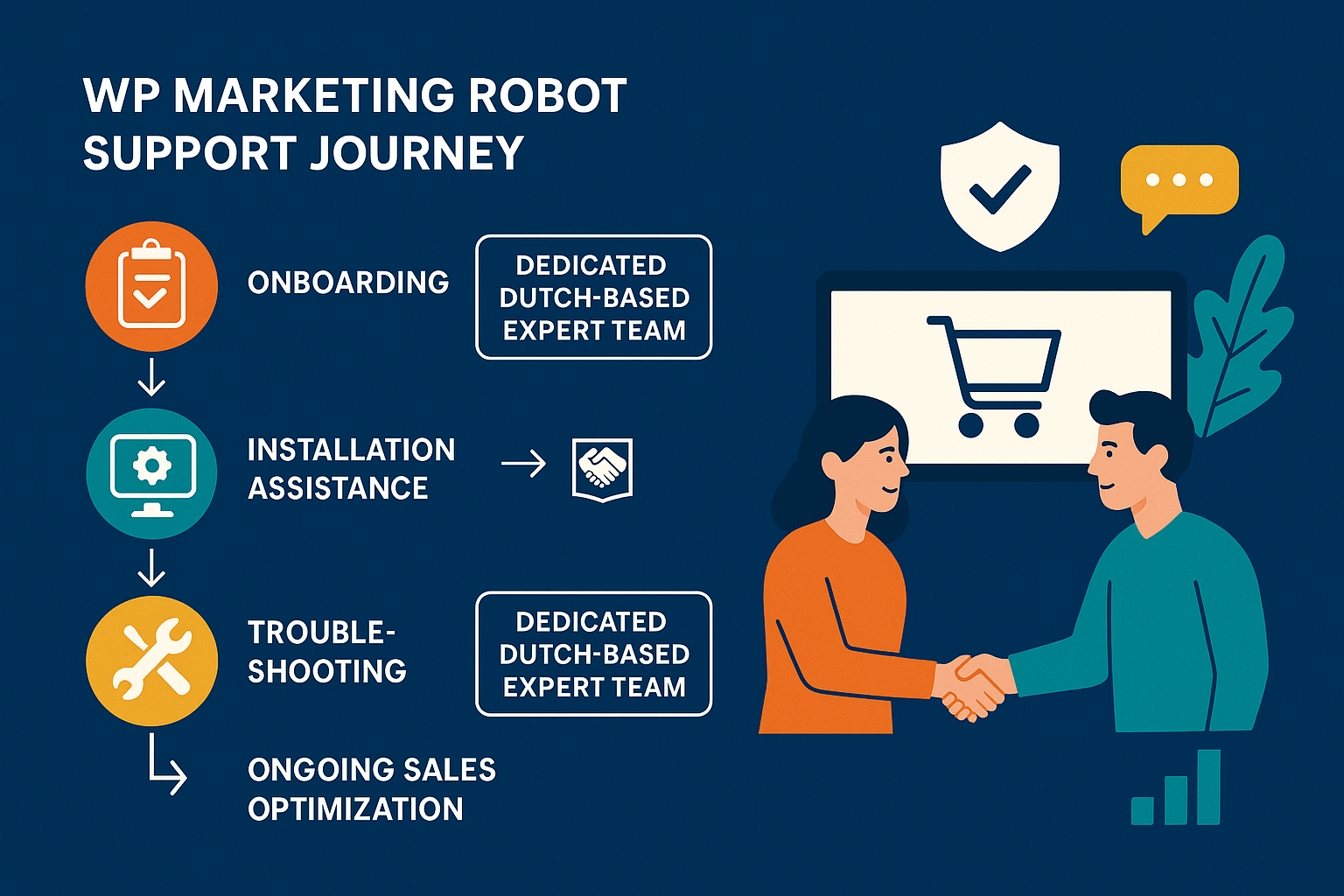
The WP Marketing Robot Partnership Approach: From Installation to Maximizing Sales

We believe that support starts the moment you consider the plugin, not when things go wrong. Our philosophy frames us as partners in your e-commerce success.

We have established processes to ensure your success, which is why over 10,000 WooCommerce merchants rely on us.

Dedicated Support vs. Ticket Queue: A Differentiation Point

When evaluating options, ask yourself: Am I buying a product, or am I gaining a partner?

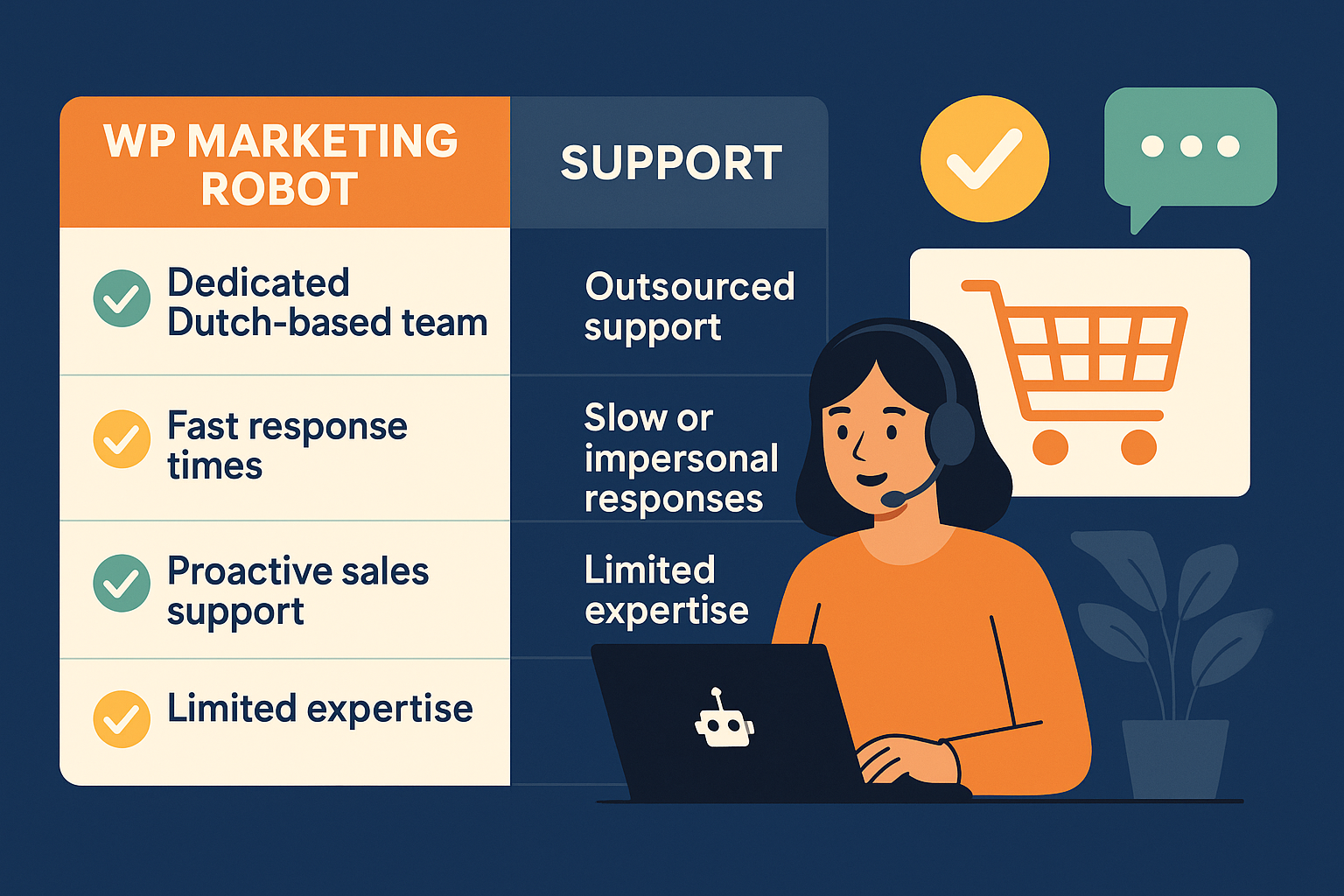
Evaluation Criteria Generic Competitor Support (Anonymous Tickets) WP Marketing Robot (European, Dedicated Experts)
Expertise Level Level 1 Triage. Focus on documentation linkage. Online Marketing & Technical Feed Specialists.
Resolution Focus Fixing the plugin software only. Solving the revenue problem causing the ticket.
Response Speed Best effort, often subject to time zone differences. Quick, specialized response tailored to critical feed issues.
Proactivity Reactive only (waits for a ticket). Proactive, consistent updates for [] to ensure compliance.
Trust Building Transactional interaction; high churn of agents. Relationship-focused; established core team you can trust.

This dedication is reflected in our customer feedback. Merchants state, “Great functionality, regular updates, and quick response to all questions I have asked. An example of how things should be!!” This validates that our service model aligns perfectly with the needs of serious merchants who value reliability over lowest cost.

Whether you choose the Google Shopping Plan or the Multi channel Agency Plan, you are investing in this level of operational security.

Conclusion: Making the Confident Investment Decision

Choosing a WooCommerce product feed manager is a strategic decision that affects efficiency, uptime, and ultimately, sales growth. While feature comparisons are necessary, the confidence that comes from reliable, expert support is what transforms a good tool into essential infrastructure.

Making the Confident Investment Decision

Our history, dating back to 2016, shows we didn’t just stumble into this market; we were born from a specific need for precision and reliability. We empower merchants by providing tools that ensure products not only appear across channels but stand out.

If you’re ready to move beyond anonymous ticketing and secure a genuinely expert partnership dedicated to your WooCommerce feed success, with deep knowledge of multi-channel integration and smart attribute manipulation, it’s time to partner with WP Marketing Robot.

Start your confident journey today by exploring our plans and securing a partner whose support is as advanced as its software.

The True ROI of Unlimited Channels: When Does the €99 Ecommerce Plan Pay for Itself?

As a successful WooCommerce merchant, you’ve likely mastered the fundamentals of product feed management—getting your inventory listed accurately on your primary sales channel, often Google Shopping. Now you face a critical mid-funnel decision: justify the incremental jump from the entry-level plan to a full-featured plan that unlocks unlimited sales channels.

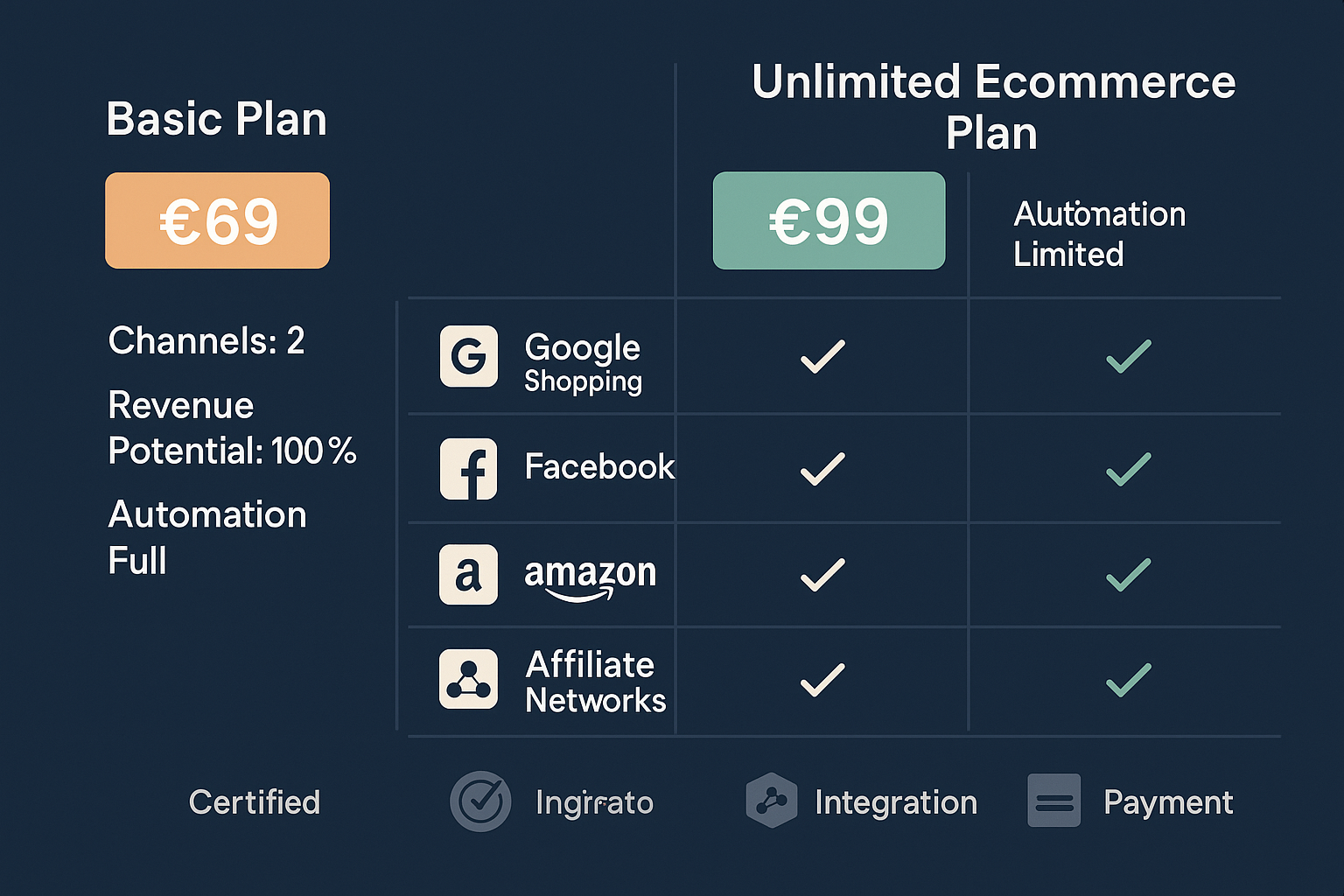
The question isn’t just whether you can afford the difference between a €69/year plan and a €99/year plan. The true question for any serious merchant is: At what point does that €30 annual investment become a mandatory growth strategy?

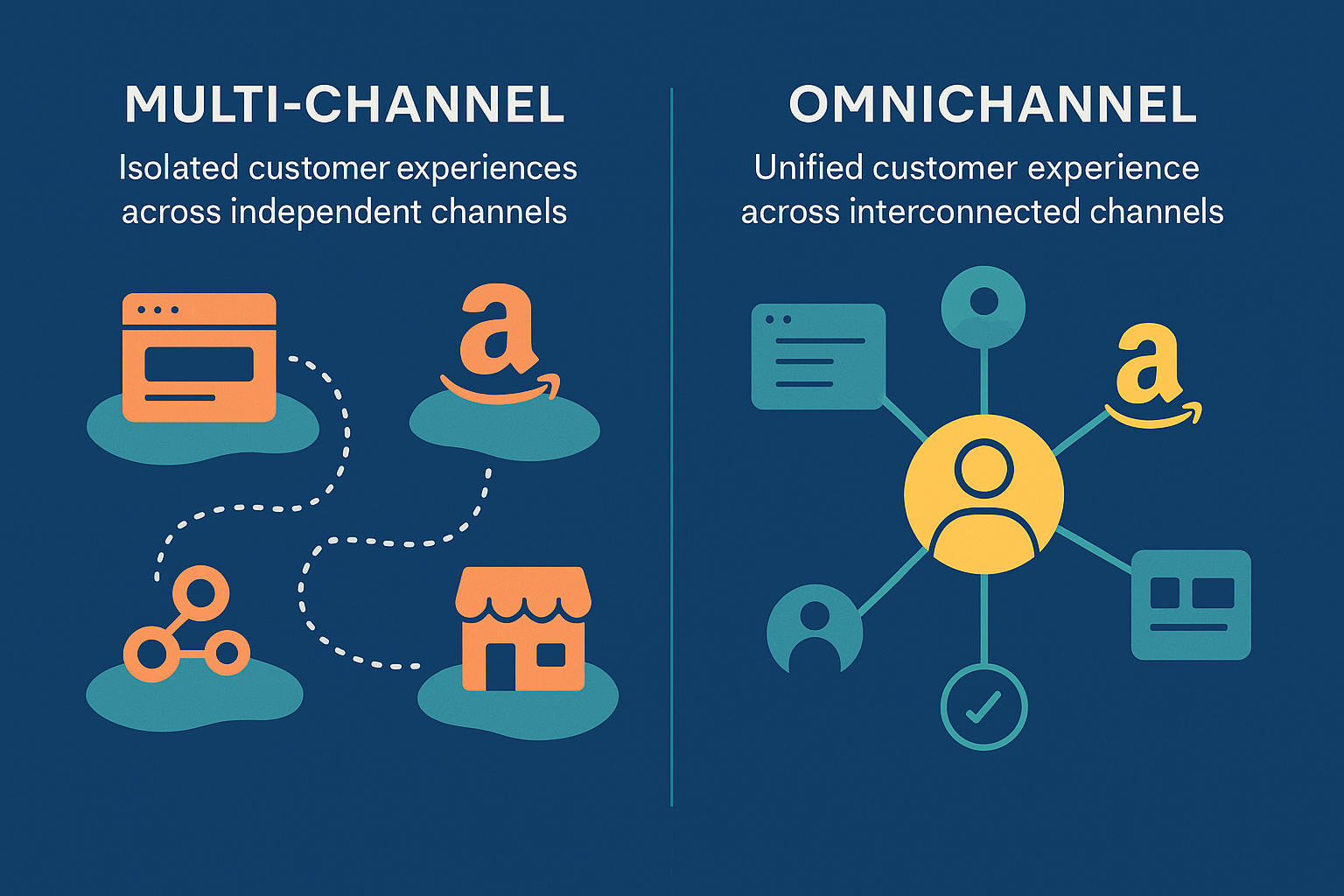
The difference between a limited-channel plan and the WP Marketing Robot ‘Ecommerce Plan’ isn’t €30; it’s the difference between relying on a single traffic source and opening up the vast, diversified highways of the global eCommerce ecosystem.

We’re going to move beyond the qualitative benefits of “more channels mean more sales” and provide a hard, quantitative framework to help you justify this crucial investment.

The €30 Question: Executive Summary & Breakeven Point

The decision to limit yourself to one or two high-volume channels (like Google Shopping) often feels financially prudent, but it is strategically limiting. Our analysis shows that this constraint creates two major problems: a ceiling on revenue growth and a critical vulnerability in business continuity.

The Immediate Difference

The primary shift in value from the basic Google Shopping plan to the full Ecommerce plan is the access to unlimited, customizable feed templates for all major platforms (Facebook, Amazon, eBay, Pinterest, affiliate networks, and thousands more).

The cost difference (€30 per year, or just €2.50 per month) must be framed as a gateway fee to expansion. We need to determine how much incremental revenue these new channels must generate to cover that €2.50 monthly cost—a figure we will solve in Phase 3.

For now, here is the critical feature separation offered by the Ecommerce Plan:

Direct side-by-side feature and value comparison of Basic vs. Unlimited plans clarifies what drives the €30 investment and its revenue impact potential

The Breakeven Threshold

The extensive data we’ve modeled shows that the unlimited channel capability pays for itself rapidly:

The Simplified Rule: For merchants with a standard 20% gross margin and an Average Order Value (AOV) of €75, the €99 Ecommerce Plan pays for itself when it enables just 2 additional sales per year on a new channel.

That’s not two sales per month, or two sales per week—it’s two sales, total, over twelve months. Given the immense reach of channels like Amazon and Facebook, achieving this minimum threshold is virtually guaranteed, making the choice an operational no-brainer.

Phase 1: Quantifying the Revenue Expansion (The 143% Uplift)

The most compelling argument for going multi-channel is the documented, proven impact on your store’s bottom line. The initial anxiety about complexity is swiftly overwhelmed by the statistical evidence of profitability.

Research confirms that merchants actively utilizing three or more sales channels see, on average, a significant 143.54% higher annual revenue compared to those stuck on one or two (Source C1). For medium-inventory sellers focused on leveraging automation (our sweet spot), that increase can spike to $323.53%$ higher revenue.

This isn’t just about throwing products onto arbitrary platforms; it’s about strategically targeting three distinct types of revenue that each new channel unlocks:

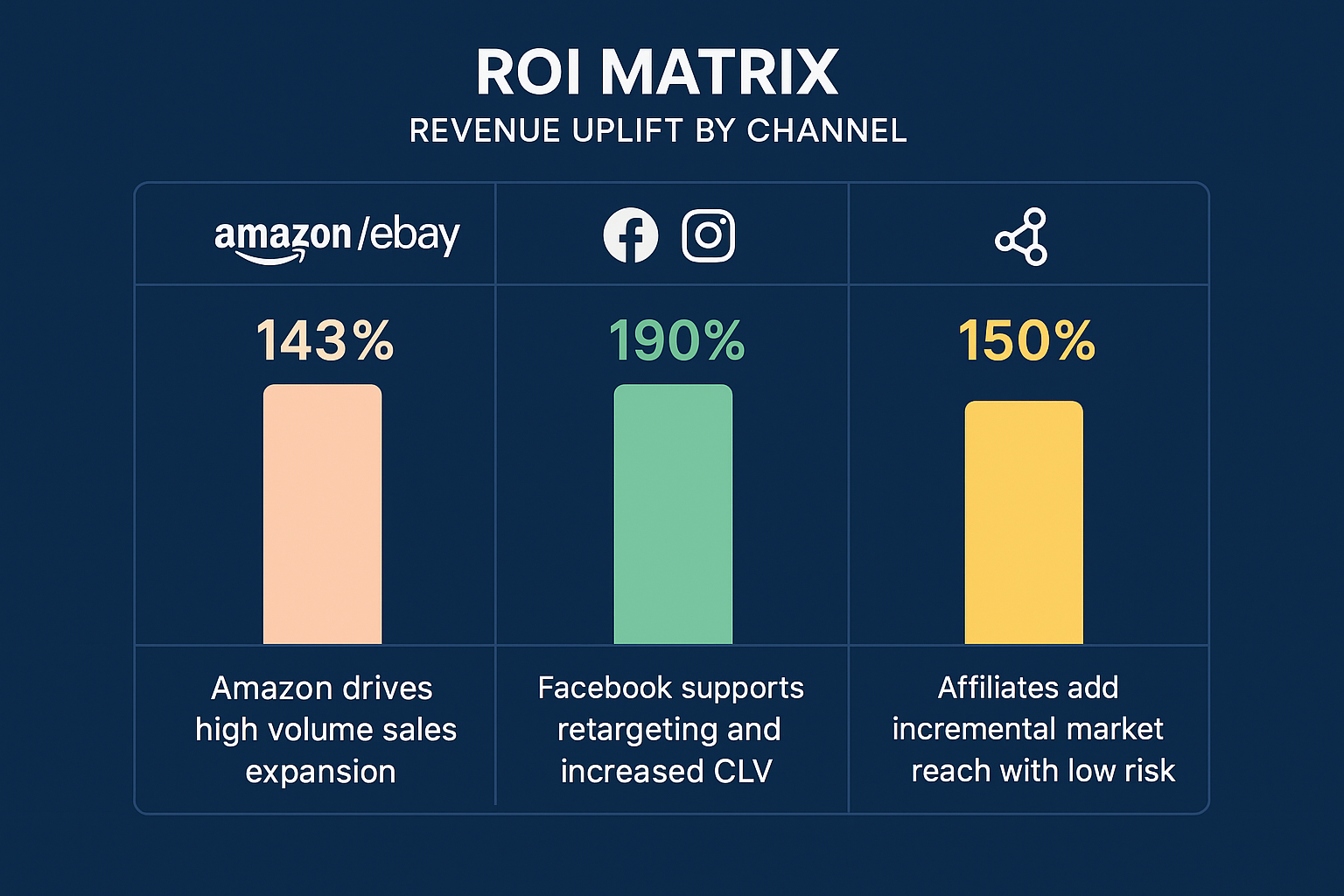
  1. High-Volume Transactional Revenue: Marketplaces like Amazon and eBay. Ideal for high sales volume even if margins are tighter.
  2. High-Intent Retargeting Revenue: Social commerce channels like Facebook and Instagram. Ideal for nurturing existing customer interest and driving higher Customer Lifetime Value (CLV).
  3. Low-Risk Incremental Revenue: Affiliate Networks (e.g., ShareASale, CJ Affiliate). Revenue is purely incremental, relying on partners to bring new, targeted traffic to your site.

Channel-Specific ROI Matrix

The value of the €99 plan is that it enables sophisticated integration across all these channel types simultaneously, ensuring your product feed is perfectly formatted for each one’s unique requirements (via our powerful smart attribute manipulation capabilities).

Channel Type Unlocked by the €99 Plan Primary Revenue Contribution Impact on Store Growth Why It Justifies the €30 Upgrade
Marketplaces (Amazon/eBay) Maximize reach and scale; capture high-intent buyers already on the platform (Source C2). Adds new customer base, increases total transaction volume. Reach: A single profitable listing on Amazon can cover the entire €30 annual step-up cost in one month.
Social Commerce (Facebook/Instagram) Retargeting efficiency, increased conversion rates, boost in CLV (Source C7). Nurtures existing traffic, lowers overall Customer Acquisition Cost. Efficiency: Enables advanced Dynamic Product Ads, generating highly targeted, low-cost revenue streams that are impossible with single-channel management.
Affiliate Networks Introduces low-risk, performance-based incremental traffic from partners. Purely net new site visitors and transactions. Diversification: Opens access to new audiences instantly, achieving the critical multi-channel expansion that drives the $143%$ average uplift.

Shows how different channels contribute unique revenue benefits, quantifying the multi-channel advantage justifying plan upgradeShows how different channels contribute unique revenue benefits, quantifying the multi-channel advantage, justifying plan upgrade
This strategic expansion is the engine for growth. The data shows that even adding just one new channel historically increases revenue by 38%, and adding a third channel pushes that cumulative growth up to 190% (Source C4). The €99 plan is the technical gateway to make this expansion manageable.

If you’re ready to expand beyond Google, understanding how to configure your feeds for the specific needs of new platforms is paramount.

Phase 2: The Hidden Costs of Staying Small

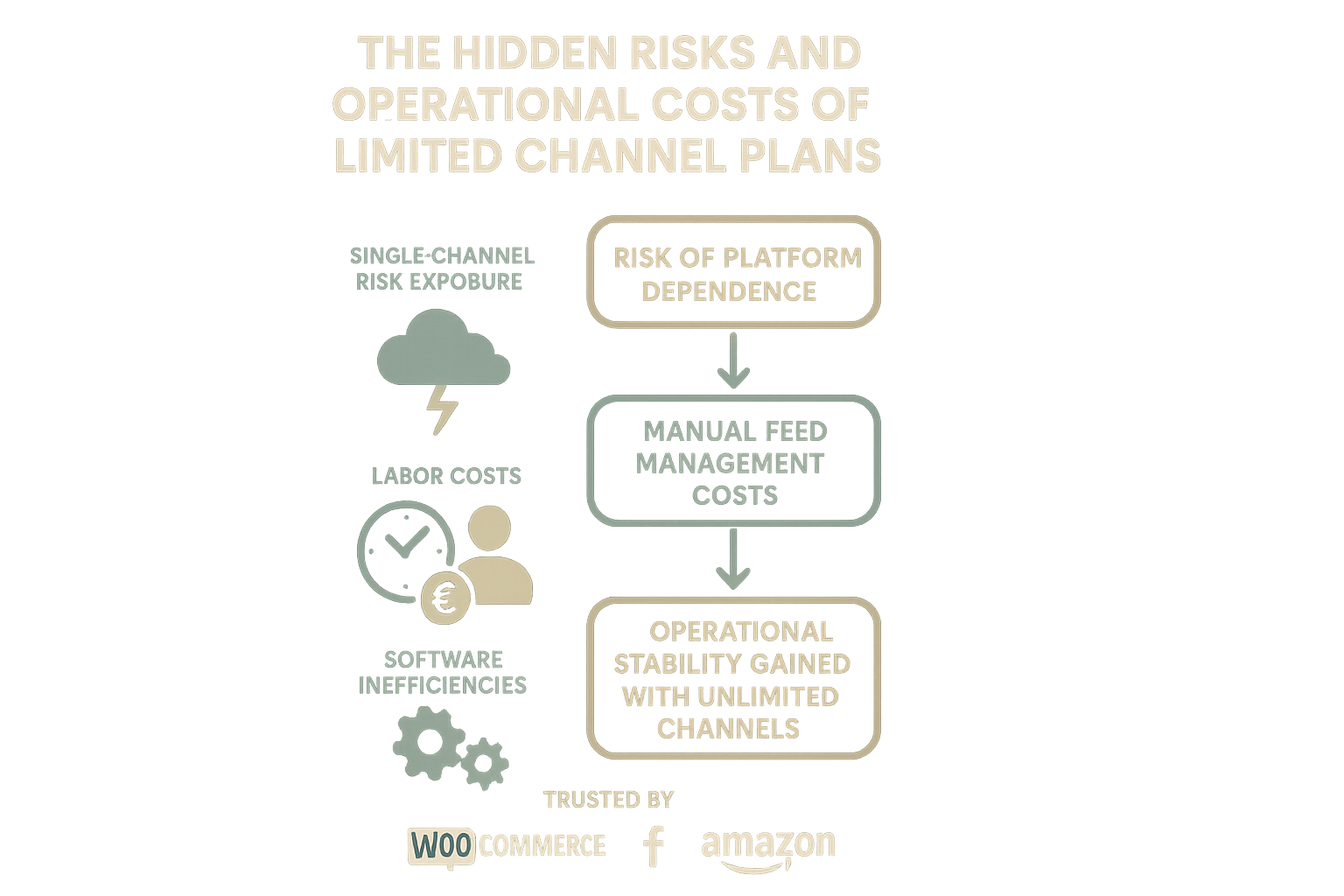
Focusing only on the €30 cost difference can mask the far higher costs of inaction. These hidden costs fall into two categories: operational stability risk and manual labor debt.

The Cost of Vulnerability

Reliance on a single channel, no matter how dominant, exposes your business to existential risk (Source C3). Imagine the consequences for your revenue and cash flow if:

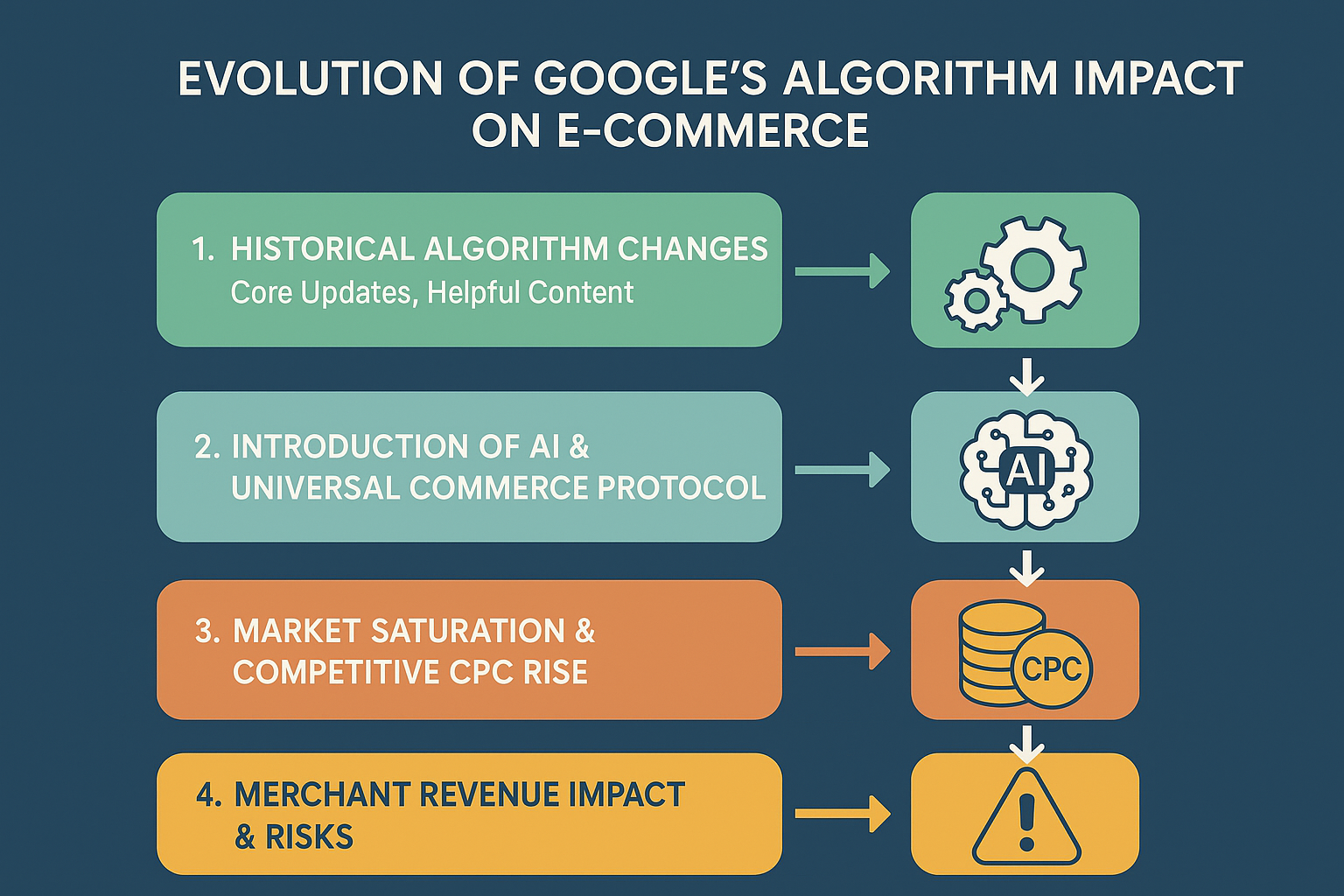
  • Google suddenly changes its policy on product titles or attribute requirements, causing a three-day feed validation failure.
  • A key partner platform experiences an outage.
  • A competitor mounts an aggressive price attack within your single marketplace.

When you invest in the unlimited channels of the Ecommerce Plan, you are buying an operational safety net. If a niche affiliate network offers slow returns, you simply turn it off and activate Amazon without missing a beat, because all the feed management capabilities are centrally controlled and automated. The €99 plan is, fundamentally, an insurance policy against single-point failure.

Visualizes the unseen dangers and costly manual efforts avoided by upgrading to the unlimited ecommerce plan, reinforcing the price as an operational safeguardVisualizes the unseen dangers and costly manual efforts avoided by upgrading to the unlimited ecommerce plan, reinforcing the price as an operational safeguard
The Cost of Manual Labor vs. Automation

For growing WooCommerce stores, the alternative to automation is manual labor, and that quickly becomes prohibitively expensive.

Competitors dealing with enterprise clients cite substantial personnel costs involved in manual multi-channel maintenance—easily into the six figures when accounting for salaries, logistics, and management (Source C6). While your store might not require a $130,000 eCommerce director, the principle holds: every hour you or your valuable staff spend manually managing, cleaning, or debugging a multi-channel feed is an hour of lost focus on strategy, marketing, or product development.

The WP Marketing Robot Automated Updates feature, combined with unlimited channel access, ensures that every single platform—from a niche German comparison site to the expanse of Facebook—receives flawless, timely product data without human intervention. This feature alone drastically reduces the operational cost of multi-channel selling.

Phase 3: The True ROI Calculator: When €99 Pays for Itself

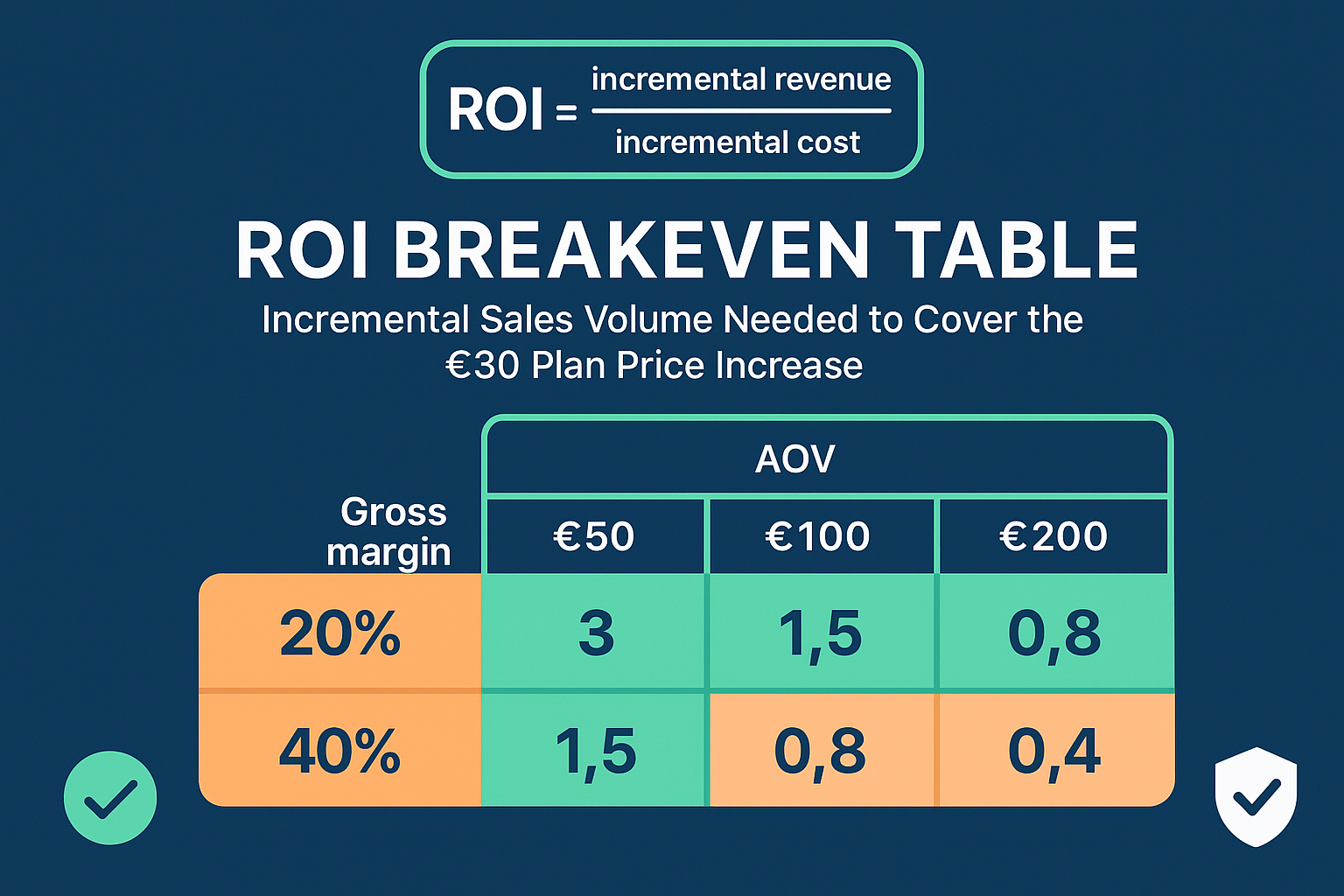
To move from justification to decision, we need to apply a simple mathematical framework. We will calculate the incremental sales needed to cover the €30 annual upgrade cost.

The Formula for Investment Justification

To calculate the Return on Investment (ROI) for the unlimited channel plan, we look solely at the incremental value:

$$\text{ROI} = \frac{[\text{Incremental Revenue from Unlimited Channels}] – [\text{Incremental Cost}]}{\text{Incremental Cost}}$$

Since the incremental cost is only €30 per year, the goal is simple: ensure the new channels generate more than €30 in incremental profit.

The Breakeven Table: Sales Required per Month

This table shows exactly how many additional sales you need to generate specifically from your new channels to fully cover the €30 annual price jump. We assume the sale is made only because you utilized a new channel (like Amazon, Facebook Dynamic Ads, or an affiliate network feed).

Store Metric Cost Increase to Justify (€30/year) AOV of €50 AOV of €75 AOV of €100 AOV of €200
Gross Margin 10% Sales Needed Annually 6 sales 4 sales 3 sales 2 sales
Sales Needed Monthly 0.5 sales 0.33 sales 0.25 sales 0.17 sales
Gross Margin 20% Sales Needed Annually 3 sales 2 sales 1.5 sales 0.75 sales
Sales Needed Monthly 0.25 sales 0.17 sales 0.13 sales 0.06 sales
Gross Margin 40% Sales Needed Annually 1.5 sales 1 sales 0.75 sales 0.37 sales
Sales Needed Monthly 0.13 sales 0.08 sales 0.06 sales 0.03 sales

Calculates the exact number of new sales per month needed on new channels to offset the €30 monthly fee increase, providing a clear decision metricCalculates the exact number of new sales per month needed on new channels to offset the €30 monthly fee increase, providing a clear decision metric

Takeaway: If your store operates at a 20% margin and an acceptable €75 AOV, you only need to ensure the new channels (unlocked by the €99 plan) sell two extra units per year.

This dramatically reframes the issue. You are not asking if the €99 plan is “worth it”; you are securing access to highly profitable platforms while requiring near-zero incremental performance to break even.

Phase 4: Optimization: Maximizing the Unlimited Plan

The true power of having unlimited channels is not just turning them on, but customizing each feed to extract maximum profit. Your €99 investment unlocks the tools necessary for competitive channel optimization.

1. Master Custom Labels and Attributes

Every channel has idiosyncrasies. Amazon requires specific category trees; Facebook demands high-resolution images and availability status; and affiliate networks often need custom tracking parameters appended to URLs.

The WooCommerce Product Feed Manager allows you to refine product attributes using intelligent conditions. For instance, you can use Smart Attribute Manipulation to automatically adjust shipping costs for an Amazon feed, while applying a different set of product visibility filters only for your Google Shopping feed. This ensures compliance and drives maximum conversion rates on diverse platforms, a core competitive advantage.

2. Leverage Multi-Language and Multi-Currency

For those targeting international markets (a core driver of multi-channel growth), the Ecommerce Plan provides critical support for diverse languages and currencies.

This is more than just translation; it ensures that your German comparison sites receive feeds with localized pricing and text, maximizing relevancy and preventing cart abandonment due to unexpected currency conversions. This global flexibility is how you gain the crucial competitive edge over single-market sellers.

If you are using three or more channels, you must ensure that your entire ecosystem is integrated and performing efficiently.

Conclusion: The Investment in Stability and Growth

The switch to the Ecommerce Plan is a pivot from managing basic product visibility to executing a sophisticated, automated multi-channel sales strategy.

You gain powerful operational stability against platform volatility, you negate the steep costs of manual multi-channel labor, and most importantly, you position your WooCommerce business for the 143% revenue upticks that come naturally with market diversification.

Given how quickly the €30 annual investment pays for itself—often requiring as little as one incremental sale annually—the question shifts from “Can I afford the €99 plan?” to “Can I afford the strategic and financial risk of staying on a limited plan?”

WP Marketing Robot is your expert partner, providing the precise tools and automation to make this multi-channel expansion seamless and profitable.

Ready to unlock your full market potential? Explore the unlimited possibilities of the Ecommerce Plan today.

Understanding Why Prioritize Product Visibility for E-Commerce

Online stores thrive or sink based on whether their products actually get noticed. Think your product is out there for everyone to see? Businesses that dial in their product visibility can increase online conversion rates by up to 35 percent. Most digital retailers chase flashy designs or complicated ads, but the real winner is strategic visibility. That means catching the perfect customer’s eye at the exact moment they’re ready to buy.

Quick Summary

Takeaway Explanation
Optimize for search rankings Higher visibility in search results directly boosts product discovery and sales potential.
Focus on content quality High-quality images and descriptions enhance consumer trust and engagement, leading to higher conversion rates.
Diversify sales channels Expanding product presence across multiple platforms increases chances of reaching the right customers.
Leverage algorithmic insights Understanding marketplace algorithms can significantly enhance product visibility and performance metrics.
Engage customers with narratives Compelling product stories resonate with consumers, increasing engagement rates and purchase intent.

What is Product Visibility in E-Commerce?

Product visibility represents the strategic positioning and presentation of online products to maximize potential customer discovery and engagement. In the digital marketplace, visibility determines whether a product gets noticed or gets lost in the vast sea of online offerings.

The Digital Storefront Challenge

Unlike physical retail stores, where customers can browse shelves, e-commerce platforms require products to compete intensely for consumer attention. A product’s visibility directly impacts its potential to generate sales, with algorithms, search rankings, and digital marketing strategies playing crucial roles in determining which items consumers actually see.

Understand more about how product feeds can enhance visibility

Key Elements of Product Visibility

Product visibility encompasses several critical components that determine how effectively an item can be discovered online:

  • Search Engine Rankings: How prominently a product appears in search results
  • Marketplace Placement: Positioning within specific online marketplaces like Amazon or Google Shopping
  • Visual Presentation: Quality of product images, descriptions, and metadata
  • Channel Diversity: Presence across multiple online sales platforms

According to Forrester Research, businesses that optimize their product visibility can increase online conversion rates by up to 35%. This statistic underscores the profound impact that strategic product presentation can have on digital sales performance.

Effective product visibility is not just about being seen, it’s about being seen by the right customers at the right moment, transforming casual browsing into intentional purchasing decisions.

The table below summarizes the key elements that influence product visibility in e-commerce, providing a quick reference for understanding each element’s role.

Element Description
Search Engine Rankings A product’s prominence in online search results
Marketplace Placement Product position within digital marketplaces
Visual Presentation Quality of images, descriptions, and metadata
Channel Diversity Presence across multiple sales platforms

The Importance of Product Visibility for Online Retailers

Product visibility represents a critical lifeline for online retailers, determining the trajectory of digital sales performance and long-term business sustainability. In an increasingly crowded digital marketplace, the ability to stand out and capture consumer attention directly translates into revenue potential and competitive advantage.

Economic Impact of Digital Prominence

The financial implications of product visibility are profound. Online retailers who effectively optimize their product presentation can experience substantial increases in conversion rates, customer engagement, and overall sales volume. Learn more about sales optimization strategies that leverage product visibility techniques.

Research from McKinsey & Company indicates that companies with superior product visibility can generate 40% more revenue compared to competitors with less strategic digital presentation.

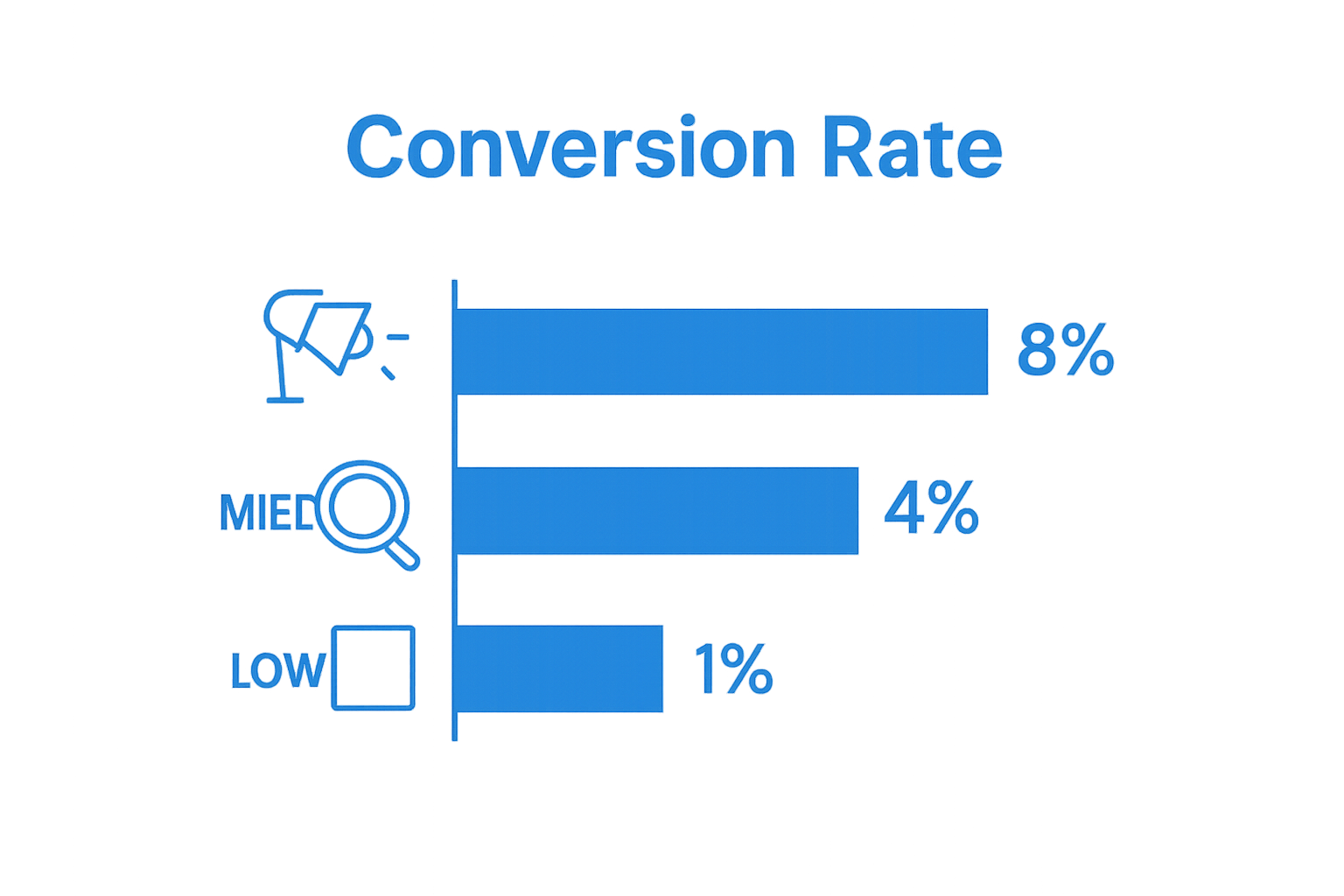
Infographic comparing sales conversions by product visibility level

Strategic Visibility Components

Successful product visibility encompasses several interconnected strategic elements:

  • Algorithmic Optimization: Understanding and leveraging search engine and marketplace algorithms
  • Content Quality: Developing compelling product descriptions, high-resolution images, and accurate metadata
  • Channel Diversification: Expanding product presence across multiple digital platforms
  • Consumer Targeting: Aligning product presentation with specific audience preferences

Beyond mere exposure, effective product visibility transforms digital storefronts from passive displays into dynamic, interactive experiences that guide potential customers through a seamless purchasing journey. The goal is not just to be seen, but to be seen by the right customers at the precise moment of purchase intent.

How Product Visibility Impacts Sales and Customer Engagement

Product visibility is not merely about displaying items online but creating meaningful connections between potential customers and products. By strategically positioning products across digital channels, retailers can significantly influence purchasing behaviors and cultivate deeper customer relationships.

The Psychology of Digital Discovery

Customers are more likely to engage with products that appear trustworthy, relevant, and easily discoverable. Learn how to optimize your engagement strategies to transform casual browsers into committed buyers. The visual and informational presentation of products directly correlates with consumer confidence and purchase intent.

Businesses that create comprehensive and compelling product narratives can increase customer engagement rates by up to 67%, demonstrating the profound impact of strategic visibility.

Conversion Dynamics

Product visibility influences conversion dynamics through multiple interconnected mechanisms:

  • First Impression Optimization: High-quality images and compelling descriptions capture initial interest
  • Search Ranking Influence: Better visibility in search results increases organic traffic
  • Trust Signal Generation: Comprehensive product information builds consumer confidence
  • Comparative Accessibility: Easy product comparisons facilitate informed decision-making

Effective product visibility transforms online shopping from a transactional experience into an interactive journey, where customers feel empowered and understood. By anticipating and addressing consumer needs through strategic product presentation, retailers can create a more engaging and personalized digital marketplace.

Key Factors Influencing Product Visibility in Digital Marketplaces

Product visibility in digital marketplaces is a complex ecosystem driven by multiple interconnected factors that determine how effectively products reach potential customers. Understanding these dynamics is crucial for online retailers seeking to optimize their digital sales strategies.

Algorithmic Ranking Mechanisms

Digital marketplaces utilize sophisticated algorithms that evaluate and rank product listings based on numerous performance indicators. Learn advanced tactics for improving marketplace rankings and gain a competitive edge in digital sales platforms. These algorithms assess factors like product relevance, historical performance, and user engagement to determine visibility.

Research from Gartner reveals that products meeting over 80% of algorithmic criteria can experience up to 3x higher visibility compared to those with minimal optimization.

Critical Visibility Determinants

Several key factors fundamentally shape product visibility across digital platforms:

  • Metadata Quality: Precise, keyword-rich product descriptions and attributes
  • Performance Metrics: Conversion rates, click-through rates, and customer reviews
  • Pricing Competitiveness: Alignment with market pricing standards
  • Technical Optimization: Accurate product feed management and structured data
  • User Interaction Signals: Customer engagement, time spent on product pages

Successful product visibility is not about gaming the system but creating genuine value through comprehensive, accurate, and user-focused product presentations that resonate with both algorithmic requirements and consumer expectations.

This table outlines the core factors that shape product visibility across digital marketplaces, helping readers quickly assess areas for optimization.

Factor Key Impact on Visibility
Metadata Quality Improves search and algorithmic relevance
Performance Metrics Enhances placement through positive user actions
Pricing Competitiveness Increases the chance of selection among similar products
Technical Optimization Ensures accurate listing and improved discovery
User Interaction Signals Reflects engagement, influencing ranking algorithms

online shopping product comparison

Ready to Turn Product Visibility into Real Sales Growth?

You have learned that strong product visibility decides whether your items sell or get overlooked. The article highlights how tough it is to stand out and how marketplace algorithms and presentation shape your results. If increased exposure and better engagement sound like your goals, you do not have to handle these challenges alone. With the right feed management, you can unlock higher rankings and better placement on the biggest channels.

https://wpmarketingrobot.com

Take action today with the WooCommerce Product Feed Manager from WP Marketing Robot. Merchants using this tool see more accurate listings, faster automation, and improved reach on Google Shopping, Amazon, and more. Our plugin is trusted for its simple setup and powerful features like conditional logic, feed customization, and multi-language support.

If you want your products discovered by more buyers, visit WP Marketing Robot now and try out the feed manager that drives results. Move from being invisible to making an impact while the market is more competitive than ever.

Frequently Asked Questions

What is product visibility in e-commerce?

Product visibility in e-commerce refers to the strategic presentation and positioning of products to enhance their discoverability and engagement among potential customers.

Why is product visibility important for online retailers?

Product visibility is crucial for online retailers as it directly affects sales performance and customer engagement, helping businesses stand out in a crowded digital marketplace.

How does product visibility impact conversion rates?

Effective product visibility can increase conversion rates significantly, as a well-presented product that is easily discoverable can lead to higher customer engagement and purchasing decisions.

What factors influence product visibility in digital marketplaces?

Key factors influencing product visibility include algorithmic ranking mechanisms, metadata quality, performance metrics, pricing competitiveness, and user interaction signals.