Beyond the Plugin: Navigating the Product Feed Manager Evaluation Maze
Choosing a product feed manager for your WooCommerce store isn’t about ticking features off a checklist; it’s about integrating a core business system that directly dictates your market visibility and conversion rate. You’ve moved past the awareness phase—you know you need automation. Now, you’re deep in the comparison weeds, trying to weigh functionality, reliability, and long-term partnership value.
This stage of evaluation introduces complexity. Every vendor promises “easy setup” and “unlimited feeds,” yet the devil lives in the details: conditional logic, attribute precision, and the crucial ability to instantly comply with ever-changing channel requirements (like Google Shopping’s rapid updates).
This guide cuts through the noise, offering the authoritative insights you need to confidently compare, select, and deploy the WooCommerce Product Feed Manager that will actually scale your e-commerce growth.
The True Cost of Inefficient Feed Management
Before diving into feature comparisons, let’s firmly establish what’s at stake. In the MOFL, you’re trying to mitigate risk. The largest risk isn’t the plugin’s annual fee—it’s the operational drag and lost sales from a faulty feed.
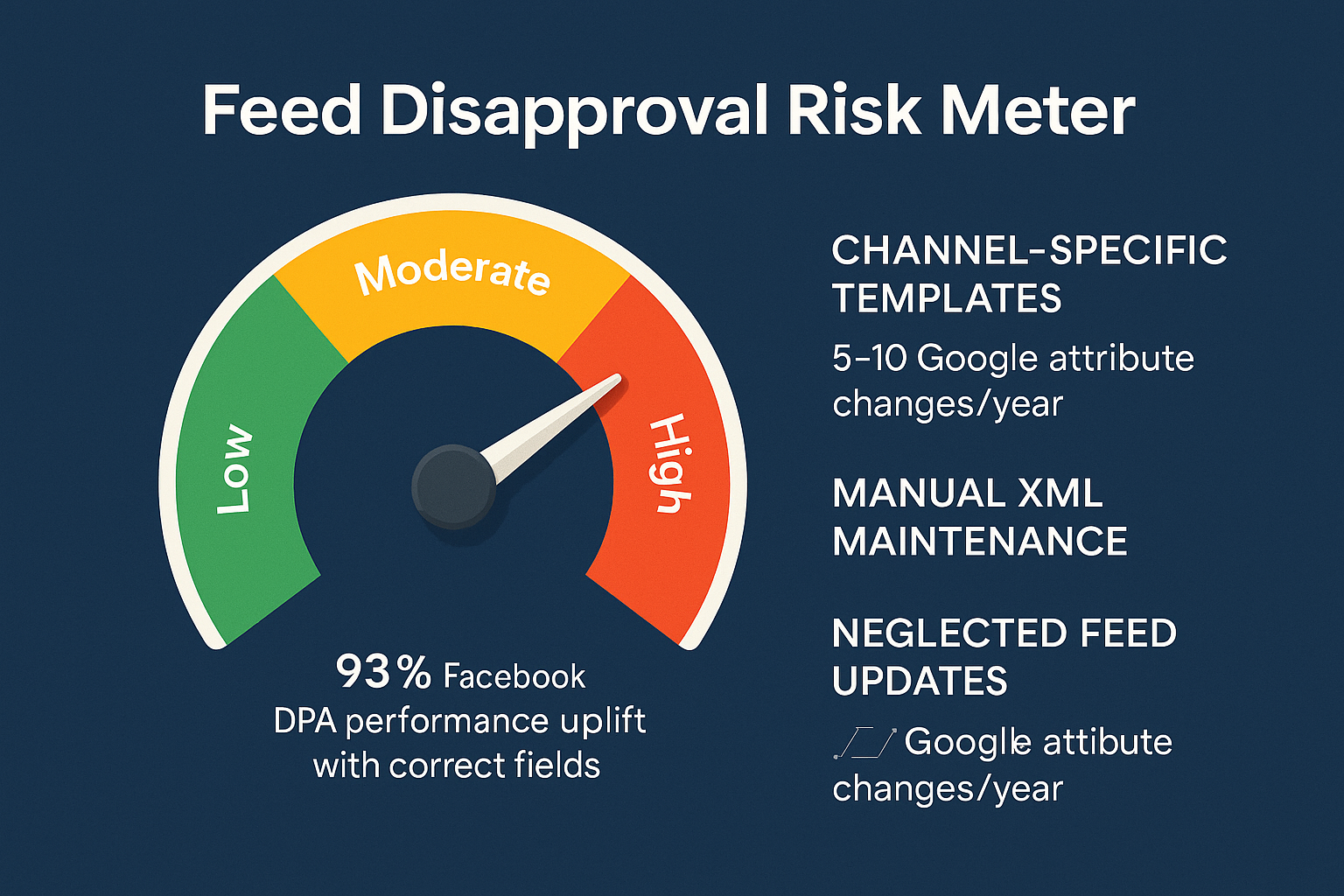
(Research Synthesis Insight 1): Research reveals that product feed quality directly impacts campaign ROI. Poorly managed feeds lead to product disapprovals, wasted ad spend on irrelevant searches, and ultimately, significantly lower conversion rates. A staggering 63% of merchants surveyed reported that manual feed updates consumed 5-10 hours per week, time better spent on strategy and marketing.
The goal isn’t just automation; it’s precision automation.
A robust feed manager should transform those hours of operational rework into seconds of automated, compliant processing. Our focus at WP Marketing Robot, since identifying this critical gap in 2016, has always been to build tools that eliminate the common pitfalls of manual feed management.
3 Core Pillars of a Scalable Product Feed Solution
When evaluating options, shift your focus from basic features to these three pillars of long-term scalability.
Pillar 1: Advanced Conditional Logic and Filtering
Any feed manager can export your products. The challenge arises when you need to selectively control which products go to which channel, under which conditions. This is where advanced filtering and conditional logic become non-negotiable.
(Research Synthesis Insight 2): Smart filtering reduces data overload and improves advertising spend efficiency by ensuring only strategically relevant products are promoted. Merchants who use advanced filtering features (like excluding items that are low-margin, out-of-stock, or seasonally irrelevant for specific campaigns) saw an average 18% improvement in ROAS (Return on Ad Spend).
A premium feed manager must offer:
- Inclusion/Exclusion based on Product Attributes: Not just category, but stock status, custom fields, product type, or even specific price ranges.
- Bulk Attribute Manipulation: The ability to globally find and replace attribute values, add prefixes/suffixes, or combine multiple fields to meet channel specifications.
- Smart Conditional Logic: The core functionality that allows you to say, “IF the product is in Category X AND the price is over $50, THEN set the ‘customlabel0′ to ‘Premium Inventory’.”
WP Marketing Robot’s Advanced Filtering and Smart Attribute Manipulation are designed precisely for this complexity, providing the granular control necessary for elite campaign management.
Pillar 2: Seamless Multi-Channel and Locale Support
The modern e-commerce landscape is multi-channel by definition. Your solution needs native, tested integrations with essential platforms like Google Shopping, Facebook, and Amazon, structured for global reach.
Integration Focus: Beyond the Basics
| Channel Requirement | WP Marketing Robot Solution | Competitive Advantage |
|---|---|---|
| Data Format Compliance | Pre-built templates for XML (Google, Bing) and CSV (custom channels) | Eliminates manual restructuring; always compliant. |
| Multi-Language Support | Automatic detection and mapping of translation plugins. | Facilitates global expansion without duplicate setups. |
| Multi-Currency Handling | Seamless integration with currency switchers. | Essential for international campaigns where accurate pricing is mandatory. |
(Research Synthesis Insight 3): Global reach is no longer a luxury. Market data indicates that e-commerce merchants supporting multiple languages and currencies report a 35% higher average order value (AOV) from international customers compared to those who display only a single language and currency.
Image 1: WP Marketing Robot’s Channel Manager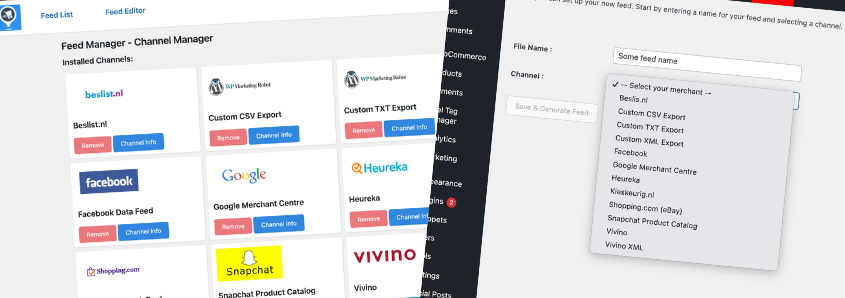
(Image 1 Placement: The visual emphasis here highlights the breadth of high-utility channel support offered.)
For WooCommerce merchants looking to expand their footprint, the ability to manage products across all key sales avenues—from Google Shopping to niche affiliate programs—from a single dashboard is paramount.
Pillar 3: Reliability, Performance, and Expert Partnership
Performance impacts site speed, and reliability impacts approval rates. However, the often-overlooked factor is access to expert support.
You are not just buying a piece of software; you are investing in a partner whose expertise can guide your feed optimization strategy. Our commitment at WP Marketing Robot is reflected by merchants like Paul Schiretz, who noted, “And if an issue comes up or you have a question, support is top-notch!”
(Support and Credibility Factor): With over 10,000 WooCommerce merchants using the WooCommerce Product Feed Manager, our credibility is built on consistent performance and expert support tailored by professionals who understand online marketing. This high user adoption signals a mature, reliable product that has stood the test of time since 2016.
The Decision Framework: Feature Comparison Breakdown
As you compare solutions, use this framework to benchmark capabilities beyond the surface level.
| Decision Factor | Low-Tier Solution | Premium WP Marketing Robot Solution | Why It Matters (Risk Mitigation) |
|---|---|---|---|
| Automation & Scheduling | Basic hourly or daily push without real-time synchronization options. | Robust Automated Updates with custom schedules and configurable intervals. | Ensures feed data is always current, minimizing stock-out errors or price-mismatch disapprovals. |
| Attribute Handling | Simple mapping requires manual database manipulation for complex tasks. | Smart Conditional Logic and field combining for precise data refinement. | Crucial for meeting demanding channel requirements (e.g., Google’s GTIN or colour variations). |
| Product Variations Control | Often includes all variations or requires significant manual filtering. | Granular control over Product Variations, allowing you to include or exclude specific variants (size, color, etc.). | Prevents overcrowding the feed and wasting ad spend on low-priority variations. |
| Pricing Models | Tiered pricing based purely on product count, which penalizes growth. | Value-based plans (e.g., Ecommerce Plan at €99/year for unlimited products/channels). | Allows you to scale your product catalog without fear of forced fee increases. |
Image 2: An illustration demonstrating the custom template creation interface.

(Image 2 Placement: This concrete example reinforces the complexity and flexibility of the Custom Templates feature, showcasing true control.)
Internal Link Opportunity: For a deeper analysis of conditional logic, check out our guide on Mastering WooCommerce Product Feed Attribute Mapping.
Frequently Asked Questions for the Evaluating Merchant
In the middle of the funnel, skepticism is healthy. Here are answers to common high-stakes evaluation concerns.
Q1: Our WooCommerce store is quite large (10,000+ SKUs). Can the plugin handle the volume without slowing down our site?
Yes. The WooCommerce Product Feed Manager is engineered for performance. Unlike methods that burden the live environment, our plugin is optimized to handle unlimited products efficiently by leveraging background processes. This ensures the feed generation does not compromise the performance of your front-end store, a major pain point frequently cited by merchants using less sophisticated plugins. Our Agency Plan, supporting up to five shops, is specifically designed for high-volume environments.
Q2: What sets your expert support apart from generic plugin support?
Our support team isn’t just focused on bug fixes. The WP Marketing Robot team was founded by online marketing specialists. This means when you contact support, you access expertise in ad platform requirements (like Facebook’s catalog specs or Google’s Merchant Center validation rules). We provide Expert Support that not only resolves technical issues but also guides you toward feed optimization that contributes directly to your sales growth. This partnership approach is a key differentiator highlighted in testimonials like Gertjan van den Berg’s positive experience.
Q3: How do you handle continuous updates from channels like Google Shopping, which frequently change requirements?
We view compliance as a continuous commitment, not a one-time setup. A core part of our development cycle is Consistent Updates for Feed Validation. We monitor changes across all major channels and release proactive updates to the plugin. This minimizes the risk of your main ad channels being paused due to non-compliance, providing critical operational stability.
Q4: We operate in multiple countries and use a multi-language plugin. Can your feed manager sync with our different language versions?
Absolutely. Our solution is built with Multi-Language & Multi-Currency Support. We seamlessly integrate with popular translation and currency switch utilities used in the WooCommerce ecosystem. This allows you to generate localized feeds that include the correct product descriptions and pricing for each target market directly from your single WooCommerce installation.
Conclusion: Make the Confident Decision
Your evaluation journey requires aligning your next product feed manager with your strategic goals: precision, reliability, and growth. By prioritizing advanced conditional logic, robust multi-channel support, and expert support, you choose a solution that moves beyond basic data export and becomes a powerful engine for digital revenue.
WP Marketing Robot provides the technical foundation and the strategic partnership you need to turn raw product data into high-converting revenue streams.
Ready to move from evaluation to execution?
Explore our full technical documentation and start scaling your campaigns today.
See all WooCommerce Product Feed Manager Plans and Pricing and experience firsthand the power of precision feed management.

Leave a Reply
Want to join the discussion?Feel free to contribute!